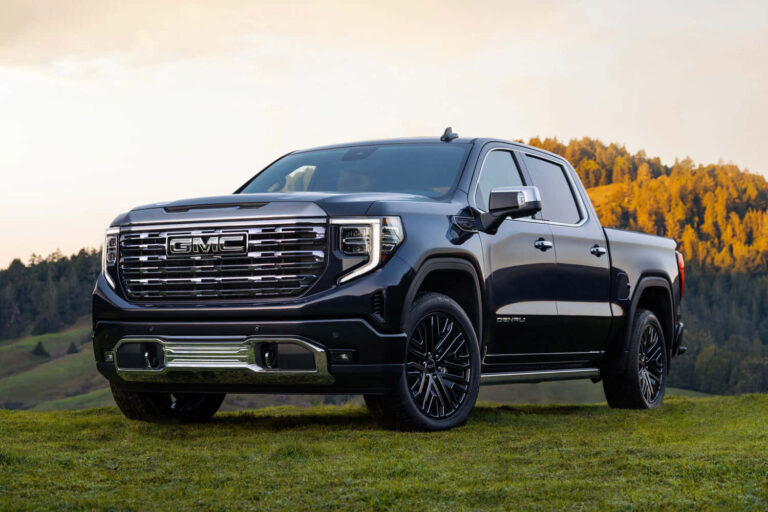
Unlocking the True Worth: Your Ultimate Guide to the Book Value of a Truck
Unlocking the True Worth: Your Ultimate Guide to the Book Value of a Truck Lmctruck.Guidemechanic.com
Every truck owner, prospective buyer, or seller eventually confronts the question of value. What is my truck truly worth? This isn’t just a casual query; it’s a critical piece of information that impacts everything from insurance claims to loan approvals and fair market transactions. At the heart of this valuation often lies a term many hear but few fully understand: the book value of a truck.
Understanding this concept is far more than just knowing a number. It’s about gaining leverage, making informed decisions, and protecting your investment. As an expert blogger and professional content writer in the automotive space, I’ve seen firsthand how a clear grasp of book value can empower individuals and businesses alike. This comprehensive guide will demystify the book value of a truck, exploring its nuances, its importance, and how you can accurately determine it for your vehicle.
Unlocking the True Worth: Your Ultimate Guide to the Book Value of a Truck
What Exactly is the Book Value of a Truck?
At its core, the book value of a truck represents an estimated value provided by independent, third-party appraisal guides. These guides compile vast amounts of data on sales, depreciation rates, and market trends to generate a standardized value for specific makes, models, and years. Think of it as a widely accepted benchmark, rather than a definitive price tag.
This value serves as a reference point for various stakeholders in the automotive industry. It helps banks assess collateral for loans, insurance companies determine payouts for claims, and dealerships price vehicles for sale or trade-in. It’s designed to offer an objective perspective, removing much of the guesswork from truck valuation.
Based on my experience analyzing countless vehicle transactions, the book value aims to reflect a truck’s worth under typical conditions. It assumes average mileage for its age and a condition that falls within reasonable wear and tear. Deviations from these averages, whether positive or negative, will naturally cause the actual market price to fluctuate above or below the published book value.
Why Does the Book Value of Your Truck Matter?
Knowing the book value of a truck isn’t just an academic exercise; it has tangible implications across several crucial scenarios. This single figure can significantly influence your financial interactions related to your vehicle. Let’s delve into why this number holds such weight.
For Insurance Purposes
When disaster strikes, and your truck is damaged or totaled, your insurance company will often reference the book value to determine your payout. They use this figure as a primary component in calculating the Actual Cash Value (ACV) of your vehicle. A higher book value can translate into a larger settlement, helping you replace your truck or cover repair costs more effectively.
It’s vital to remember that insurers aim to compensate you for the truck’s worth at the time of the incident, factoring in depreciation. Therefore, understanding how your truck’s book value changes over time is key to anticipating potential insurance payouts. Pro tips from us: Regularly review your policy and understand how your insurer defines "total loss" in relation to your truck’s book value.
For Loan Applications
If you’re looking to finance a new or used truck, lenders heavily rely on its book value. This figure helps them assess the collateral value of the vehicle against the loan amount you’re requesting. A truck with a strong book value makes it easier to secure favorable loan terms, as it represents less risk for the financial institution.
Conversely, a truck with a significantly depreciated book value might limit your borrowing options or require a larger down payment. Banks want to ensure that if you default on your loan, they can recoup their investment by selling the vehicle. The book value provides that crucial financial security assessment.
When Buying or Selling a Truck
Whether you’re in the market for a new workhorse or looking to offload your current one, the book value of a truck serves as an invaluable negotiation tool. As a buyer, it gives you a baseline to ensure you’re not overpaying. You can confidently counter inflated asking prices by referencing established book values.
As a seller, knowing your truck’s book value allows you to set a realistic and competitive asking price. It helps you justify your pricing to potential buyers and provides a credible foundation for discussions. Common mistakes to avoid are setting prices too high (scaring off buyers) or too low (leaving money on the table) without consulting these guides.
For Business Accounting & Taxes
Businesses that own or operate trucks need to track their assets accurately. The book value plays a crucial role in accounting for depreciation, which impacts a company’s financial statements and tax obligations. Depreciation is a non-cash expense that reduces the recorded value of an asset over its useful life.
Understanding the book value allows businesses to calculate this depreciation effectively, which can lead to tax benefits. Furthermore, when a business sells a truck, the difference between the selling price and the truck’s adjusted book value (after depreciation) determines any gain or loss for tax purposes. This financial reporting is essential for maintaining accurate records and compliance.
Key Factors Influencing a Truck’s Book Value
The book value of a truck isn’t a static number; it’s a dynamic figure influenced by a multitude of variables. While valuation guides provide averages, the specific characteristics of your truck will dictate where it falls within that range, or even if it deviates significantly. Understanding these factors allows you to better predict and potentially enhance your truck’s worth.
Age and Mileage: The Primary Depreciators
Without a doubt, age and mileage are the two most significant drivers of depreciation and, consequently, book value. Trucks, like all vehicles, lose value the moment they’re driven off the lot. This initial depreciation is often the steepest. As years pass, components wear, technologies evolve, and the vehicle approaches the end of its typical lifespan.
High mileage, irrespective of age, indicates greater wear and tear on the engine, transmission, and other critical systems. Valuation guides typically assume an average annual mileage (e.g., 12,000-15,000 miles). If your truck has significantly more or less than this average for its age, its book value will adjust accordingly.
Condition (Interior & Exterior)
The physical state of your truck is a direct reflection of how it’s been maintained and used. Dents, scratches, rust, faded paint, and damaged trim will all detract from its book value. Similarly, a stained, torn, or excessively worn interior signals neglect and reduces appeal.
A well-preserved truck, both inside and out, suggests careful ownership and a potentially longer remaining service life. Even minor cosmetic flaws can collectively shave hundreds, if not thousands, off the book value. Pro tips from us: addressing small issues promptly can prevent them from becoming larger, more expensive problems that severely impact value.
Maintenance History
A comprehensive and consistent maintenance history is like a glowing report card for your truck. Records of oil changes, tire rotations, brake services, and major repairs provide tangible proof that the vehicle has been cared for. This documentation builds trust and confidence for potential buyers and positively influences book value assessments.
Conversely, a lack of maintenance records raises red flags. It suggests deferred maintenance, which could lead to costly repairs down the line. Common mistakes to avoid are losing service records or failing to perform routine maintenance, as this directly impacts perceived reliability and, by extension, market desirability and book value.
Make and Model
The manufacturer and specific model of your truck play a substantial role in its book value. Brands known for reliability, durability, and strong resale value (e.g., certain Ford, Chevrolet, Ram models) often hold their value better than others. Popular models with high demand tend to maintain their worth more effectively.
Furthermore, specific trim levels, engine options (e.g., powerful diesel engines), and cab configurations (e.g., crew cab vs. regular cab) can also significantly influence desirability and book value. A highly sought-after configuration will command a premium compared to a base model.
Optional Features & Modifications
Factory-installed optional features, such as advanced safety packages, premium infotainment systems, leather seats, or specialized towing packages, can enhance a truck’s book value. These additions increase comfort, utility, and appeal. However, the impact of aftermarket modifications is a mixed bag.
While some functional upgrades (e.g., certain suspension improvements for off-roading, bed liners) might add a little value or appeal to specific buyers, highly personalized or extreme modifications (e.g., drastic lift kits, custom paint jobs, performance tuning) can actually detract from book value. They narrow the potential buyer pool, as not everyone shares the same taste or needs.
Regional Market Demand
The demand for certain types of trucks can vary significantly by geographic region. For instance, a four-wheel-drive pickup might command a higher premium in snowy climates or rural areas compared to a front-wheel-drive sedan in a bustling city. Local economic conditions, industry trends, and even fuel prices can influence regional market demand.
Valuation guides often incorporate regional adjustments to reflect these localized preferences. What’s highly desirable in one state might be less so in another, directly impacting the book value of a truck in that specific area.
Accident History
Perhaps one of the most detrimental factors to a truck’s book value is its accident history. Even if expertly repaired, a significant accident reported on a vehicle history report (like CARFAX or AutoCheck) can drastically reduce its worth. Buyers are naturally wary of vehicles that have sustained major damage, fearing hidden issues or compromised structural integrity.
The severity of the accident, the extent of the damage, and the quality of the repairs all factor into this reduction. A clean vehicle history report is a significant asset when assessing or selling a truck.
Decoding Different Types of Truck Values (And Where Book Value Fits In)
When discussing the worth of a truck, the "book value" is just one piece of a larger puzzle. Various other valuation terms are thrown around, each representing a slightly different perspective on a truck’s monetary worth. Understanding these distinctions is crucial for informed decision-making. The book value of a truck often serves as the central reference point from which these other values derive or deviate.
Retail Value
The retail value is essentially what you would expect to pay for a truck when purchasing it from a dealership. This figure is typically the highest among all valuation types. It accounts for the dealer’s overhead costs, reconditioning expenses, sales commissions, and profit margin.
When you see a price tag on a used truck at a dealership, that price is usually aligned with its retail value. The book value provides a basis for the dealer to price their inventory competitively, ensuring they cover costs while remaining attractive to buyers.
Wholesale Value
Wholesale value is the price a dealership would typically pay to acquire a truck, either from an auction, another dealer, or a trade-in. This is generally the lowest valuation, as it represents the cost before any reconditioning or profit markup. Dealerships aim to purchase trucks at wholesale value to ensure they have room for profit when selling at retail.
The book value helps dealers determine a fair wholesale price, especially when considering a truck for their inventory. It guides their bidding at auctions and their offers on trade-ins.
Trade-in Value
The trade-in value is what a dealership offers you for your truck when you’re purchasing another vehicle from them. This value is often slightly less than the wholesale value. Dealers may offer a lower amount to account for potential reconditioning costs and to build in a profit margin on both the new sale and the traded-in vehicle.
While the book value of a truck is a strong indicator, the trade-in offer can also be influenced by the dealership’s current inventory needs, the popularity of your specific truck model, and their eagerness to close a deal on the new vehicle.
Private Party Value
The private party value reflects what you could reasonably expect to sell your truck for when dealing directly with an individual buyer, without a dealership as an intermediary. This value typically falls somewhere between the wholesale and retail prices. It’s usually higher than a trade-in offer but lower than what a dealership would ask.
When you’re selling your truck yourself, the book value provides an excellent starting point for setting your asking price. It helps you justify your price to potential buyers, who will likely also be consulting valuation guides.
Actual Cash Value (ACV)
Actual Cash Value (ACV) is a term predominantly used by insurance companies. It represents the cost to replace your truck with a comparable one, minus depreciation. Essentially, it’s the market value of your truck just before it was damaged or stolen.
Insurance companies use the book value as a primary component in calculating ACV. They will factor in the truck’s age, mileage, condition, and any specific features to arrive at the ACV, which determines your payout in the event of a total loss. For a deeper dive into understanding vehicle depreciation, check out our article on .
Salvage Value
Salvage value refers to the estimated worth of a truck that has been declared a total loss by an insurance company. Even if a truck is deemed beyond economical repair, its components (engine, transmission, body panels, etc.) or even the entire chassis might still hold some value for parts or scrap.
While not directly derived from typical book value calculations, the book value of a truck before the damage is a crucial starting point for determining if it should be salvaged in the first place. If repair costs exceed a certain percentage of the book value, it becomes a total loss.
How to Find the Book Value of Your Truck (Step-by-Step Guide)
Determining the book value of your truck is a straightforward process, thanks to several reputable online resources. These platforms have revolutionized vehicle valuation, making it accessible to anyone with an internet connection. However, accuracy hinges on providing precise and honest information about your vehicle.
Reliable Valuation Resources
Several well-established organizations publish comprehensive vehicle valuation guides. The most widely recognized include:
- Kelley Blue Book (KBB): Perhaps the most famous name in vehicle valuation, KBB provides various values, including trade-in, private party, and retail. Their extensive database and user-friendly interface make them a go-to source for many.
- NADAguides (J.D. Power Valuation Services): Long considered a benchmark for dealerships and lenders, NADAguides (now part of J.D. Power) offers detailed valuation reports that are often seen as more conservative than KBB, particularly for older vehicles.
- Edmunds: Edmunds provides its own valuation tools, offering insights into market value and what others are paying for similar vehicles in your area. They often provide excellent data on current market trends.
Pro tip from us: Always cross-reference multiple sources. While these guides are highly reputable, they may sometimes offer slightly different figures. Consulting two or three will give you a more rounded and accurate understanding of your truck’s book value. You can visit a trusted external source like Kelley Blue Book to start your valuation process.
The Process: A Step-by-Step Approach
To get the most accurate book value for your truck, follow these steps:
-
Gather Your Truck’s Details: Before you begin, have all relevant information readily available. This includes:
- Vehicle Identification Number (VIN): This unique 17-character code will automatically populate many details about your truck.
- Year, Make, and Model: The fundamental identifiers.
- Trim Level: Is it an XL, XLT, Lariat, Denali, etc.? This significantly impacts value.
- Engine Type: V6, V8, diesel, specific displacement.
- Drivetrain: 2WD, 4WD, AWD.
- Cab Configuration: Regular cab, extended cab, crew cab.
- Bed Length: Short bed, standard bed, long bed.
- Mileage: Be as precise as possible.
- Optional Features: List all factory-installed options (e.g., navigation, sunroof, towing package, premium sound, advanced safety features).
- Condition: Honestly assess the interior, exterior, mechanical, and tire condition. Most sites will ask you to rate it as excellent, good, fair, or poor.
-
Navigate to Your Chosen Valuation Platform: Go to KBB.com, NADAguides.com, or Edmunds.com. Look for sections like "Value My Car" or "Used Car Values."
-
Input Your Data: Start by entering your VIN, or manually select your truck’s year, make, and model. The site will then guide you through a series of questions about your specific configuration, mileage, and optional features. Be thorough and accurate.
-
Honestly Assess Condition: This is a crucial step. Be objective about any dings, scratches, interior wear, or mechanical issues. Overstating your truck’s condition will lead to an inflated and unrealistic book value. Most sites provide clear definitions for each condition category.
-
Interpret the Results: Once you’ve entered all the information, the platform will generate various book values. You’ll typically see:
- Trade-in Value: What a dealer might offer.
- Private Party Value: What you might get selling to an individual.
- Retail Value: What a dealer might sell it for.
Each value serves a different purpose, as discussed previously. Consider which value is most relevant to your current situation.
The Limitations of Relying Solely on Book Value
While the book value of a truck is an indispensable tool, it’s essential to approach it with a clear understanding of its limitations. It provides a robust framework for valuation, but it’s not the ultimate, infallible arbiter of a truck’s worth. Relying on it exclusively can sometimes lead to missed opportunities or unrealistic expectations.
Firstly, book values are, by nature, generalized averages. They are calculated based on broad market data and national trends. This means they might not perfectly capture the unique nuances of your local market. For example, a specialized work truck might command a premium in a rural, agricultural area but be less desirable in a dense urban environment, irrespective of its published book value.
Secondly, book values can struggle to account for extreme conditions or highly unique circumstances. A meticulously maintained, low-mileage classic truck that has been garaged its entire life might be undervalued by standard guides that assume typical wear and tear. Conversely, a truck with significant unreported damage or a hidden mechanical issue might appear to have a higher book value than its true market worth.
Furthermore, highly customized trucks can present a challenge. While some desirable aftermarket upgrades might slightly boost value for a niche buyer, many personalized modifications (e.g., extreme lifts, custom paint, extensive audio systems) are not factored into standard book value calculations and can even decrease the broad appeal and actual market price. Common mistakes to avoid: Believing the book value is the final, non-negotiable offer. It’s a starting point, not the destination.
Maximizing Your Truck’s Value: Pro Tips for Owners
Maintaining and even enhancing the book value of your truck is an ongoing effort that pays dividends when it comes time to sell or trade-in. Proactive steps throughout your ownership can significantly influence how your truck holds its worth. Think of it as investing in your asset’s future.
-
Prioritize Regular Maintenance and Keep Records: This is arguably the most critical step. Adhere to your manufacturer’s recommended service schedule for oil changes, tire rotations, fluid checks, and major tune-ups. Keep meticulous records of all services performed, whether by a dealership or an independent mechanic. A stack of organized service records is a powerful selling point and justifies a higher book value. To learn more about effective maintenance strategies, read our guide on .
-
Address Minor Repairs Promptly: Don’t let small issues fester. A cracked windshield, a broken taillight, or a warning light on the dashboard can quickly escalate into larger, more expensive problems that severely impact value. Fixing these minor issues immediately not only preserves your truck’s condition but also demonstrates responsible ownership.
-
Maintain a Clean Interior and Exterior: Regular washing and waxing protect the paint from environmental damage and keep your truck looking its best. Inside, vacuum regularly, wipe down surfaces, and address spills immediately to prevent stains and odors. A clean, well-maintained appearance creates a positive first impression and suggests overall care.
-
Protect the Interior: Use floor mats, seat covers, and sunshades to prevent premature wear, fading, and damage to the upholstery and dashboard. These inexpensive accessories can significantly extend the life and appearance of your truck’s interior.
-
Avoid Excessive or Taste-Specific Modifications: While some functional upgrades can be beneficial, highly personalized or extreme modifications often limit your buyer pool. If you do modify your truck, consider keeping original parts so you can revert it to stock if needed, or choose modifications that are widely appealing and easily reversible.
-
Drive Responsibly: Aggressive driving, frequent hard braking, and rapid acceleration put undue stress on your truck’s engine, transmission, and brakes. A smooth, responsible driving style reduces wear and tear, potentially extending the lifespan of components and maintaining mechanical integrity.
-
Store Your Truck Safely: Whenever possible, park your truck in a garage or under a carport to protect it from harsh weather, UV rays, and potential theft or vandalism. This helps preserve its exterior finish and interior condition.
Conclusion: Empowering Your Truck Ownership Journey
Understanding the book value of a truck is more than just a financial exercise; it’s a fundamental aspect of informed truck ownership. From negotiating a fair price when buying or selling, to securing favorable loan terms, and ensuring adequate insurance coverage, this key metric empowers you to make smarter decisions throughout your truck’s lifecycle.
While it’s a powerful reference, remember that book value is a guide, not a rigid decree. It serves as an excellent starting point, informing your expectations and providing leverage in various transactions. By combining book value insights with an honest assessment of your truck’s unique condition and market dynamics, you unlock its true potential.
We encourage you to utilize the resources available, meticulously track your truck’s history, and proactively maintain it. By doing so, you’re not just preserving a vehicle; you’re safeguarding a significant investment. Stay informed, stay empowered, and may your truck ownership journey be both rewarding and financially sound.