What Truck Is The Best To Buy? Your Ultimate, In-Depth Guide to Finding Your Perfect Pickup
What Truck Is The Best To Buy? Your Ultimate, In-Depth Guide to Finding Your Perfect Pickup Lmctruck.Guidemechanic.com
Choosing the "best" truck is a question that resonates with countless individuals, from weekend warriors and small business owners to families seeking adventure. It’s a decision often fraught with conflicting advice, a dizzying array of options, and a significant financial commitment. As an expert in the automotive world, I understand the weight of this choice.
Based on my experience, there’s no single "best" truck for everyone. The ideal pickup is a deeply personal choice, intricately tied to your unique needs, lifestyle, and budget. This comprehensive guide aims to demystify the truck buying process, providing you with the knowledge and insights needed to confidently select the perfect truck that genuinely serves you. We’re talking about finding a vehicle that doesn’t just meet expectations but exceeds them, becoming an indispensable tool or a cherished companion on your journeys.
What Truck Is The Best To Buy? Your Ultimate, In-Depth Guide to Finding Your Perfect Pickup
Defining "Best": Your Ultimate Truck Buying Guide
Before we dive into specific models or features, it’s crucial to understand that "best" is a subjective term. What’s exceptional for a contractor hauling heavy equipment might be overkill and impractical for someone needing a daily driver with occasional light hauling capabilities. Your perfect truck is one that aligns seamlessly with your primary uses, financial situation, and personal preferences.
Our mission here is to empower you to define your "best." We’ll break down the critical factors, explore various truck categories, and highlight the specifications that truly matter. By the end of this article, you’ll have a clear roadmap to navigate the truck market with confidence.
Understanding Your Needs: The Foundation of Your Decision
The journey to finding your ideal truck begins not on a dealership lot, but in your own garage or driveway, envisioning how you’ll use the truck day-to-day. This introspection is the single most critical step. Overlooking this foundational assessment is a common mistake that often leads to buyer’s remorse.
Pro tips from us: Grab a pen and paper, or open a note on your phone, and list out exactly what you expect from your future truck. Be brutally honest about your requirements and desires.
What Will You Use Your Truck For? (Purpose)
The primary purpose of your truck will dictate its size, capability, and feature set. Are you looking for a dedicated workhorse, a comfortable family hauler, or an off-road adventure machine? Each role demands different attributes.
- Work Truck (Hauling, Towing, Tools): If your truck is primarily for work, focus intensely on towing capacity, payload rating, bed dimensions, and durability. Diesel engines often shine here for their torque and longevity. Consider features like integrated trailer brake controllers and robust tie-downs.
- Family Vehicle (Daily Driver, Adventures, Space): For families, cabin space, comfort, safety features, and ride quality become paramount. Crew cab configurations are often preferred for their ample rear-seat legroom. Fuel efficiency and advanced driver-assist systems (ADAS) will also be key considerations.
- Recreation (Off-Roading, Camping, Towing Toys): Adventurers will prioritize four-wheel drive (4WD), ground clearance, robust suspension, and potentially specialized off-road packages. Towing capacity for boats, ATVs, or campers will also be a major factor. Look for features like locking differentials and skid plates.
- Daily Commute (Fuel Efficiency, Comfort): If your truck serves mainly as a daily driver with occasional utility, fuel economy and ride comfort will be high on your list. Mid-size trucks or full-size trucks with smaller, more efficient engines might be ideal. Technology and infotainment systems will also enhance the daily driving experience.
Towing and Hauling Requirements
This is where many buyers get confused, and it’s a critical area to understand. Payload and towing capacity are not interchangeable, and knowing your needs here can prevent costly mistakes.
- Payload Capacity: This refers to the maximum weight your truck can carry inside the vehicle – including passengers, cargo in the bed, and any accessories. If you plan to carry heavy tools, supplies, or a slide-in camper, this number is vital.
- Towing Capacity: This is the maximum weight your truck can safely pull. It depends on various factors, including the engine, transmission, axle ratio, and chassis. Always check your truck’s specific towing guide and remember to account for the weight of your trailer and its contents.
- GVWR (Gross Vehicle Weight Rating) and GCWR (Gross Combined Weight Rating): These are important safety numbers. GVWR is the maximum loaded weight of the truck itself. GCWR is the maximum loaded weight of the truck and its attached trailer. Staying within these limits is crucial for safety and legal compliance.
Pro Tip: Always overestimate your towing and hauling needs slightly. It’s better to have more capacity than you need than to constantly push your truck to its limits, which can lead to premature wear and safety hazards.
Budget Considerations: New, Used, and Operating Costs
Your budget extends beyond the initial purchase price. A common mistake buyers make is focusing solely on the sticker price and overlooking the long-term costs of ownership.
- Purchase Price: Decide if you’re looking for a brand-new vehicle with the latest features and warranty, or if a used truck offers better value. Used trucks can offer significant savings, but require more diligent inspection.
- Insurance: Truck insurance rates can vary wildly based on the make, model, year, and your driving record. Get quotes before you buy.
- Fuel Efficiency: Larger, more powerful trucks typically consume more fuel. Factor in your estimated annual mileage and current fuel prices. A difference of a few MPG can add up to hundreds or thousands of dollars over the lifespan of the truck.
- Maintenance and Repairs: While new trucks come with warranties, all vehicles require regular maintenance. Parts and labor for larger, more specialized trucks (especially heavy-duty diesels) can be more expensive.
- Depreciation: Trucks generally hold their value well, but some models depreciate faster than others. This impacts your resale value down the line.
Your Driving Environment
Where you primarily drive your truck will influence choices like size, maneuverability, and drivetrain.
- City Driving: A smaller mid-size truck might be easier to park and navigate tight urban streets. Full-size trucks can feel cumbersome in congested areas.
- Highway Driving: Comfort, quietness, and fuel efficiency at cruising speeds become more important. Many modern full-size trucks offer car-like ride quality.
- Off-Road/Rural: Ground clearance, 4WD, robust tires, and specialized suspension components are essential for tackling unpaved roads, mud, or rocky terrain.
Navigating the Truck Landscape: Types of Trucks
The truck market is segmented into several categories, each designed to meet different needs and budgets. Understanding these distinctions is crucial for narrowing down your options.
Mid-Size Pickup Trucks
These trucks offer a balance of capability and maneuverability, often appealing to buyers who don’t need the immense power of a full-size truck but still desire truck utility. They are a fantastic entry point into truck ownership.
- Pros: Generally more affordable, better fuel economy than full-size trucks, easier to park and navigate in urban environments, often good for light off-roading.
- Cons: Limited towing and payload capacity compared to larger trucks, smaller cabin and bed options.
- Examples: Toyota Tacoma, Ford Ranger, Chevrolet Colorado, Nissan Frontier, Jeep Gladiator.
Full-Size Pickup Trucks
The bread and butter of the American truck market, these are the most popular and versatile options. They offer a wide range of configurations, engines, and features, making them suitable for almost any task.
- Pros: Strong towing and payload capabilities, spacious and comfortable cabins, wide array of engine choices (including powerful V8s and efficient V6s), extensive aftermarket support, high resale value.
- Cons: Larger footprint can be challenging in tight spaces, generally less fuel-efficient than mid-size trucks, higher purchase price.
- Examples: Ford F-150, Ram 1500, Chevrolet Silverado 1500, GMC Sierra 1500, Toyota Tundra.
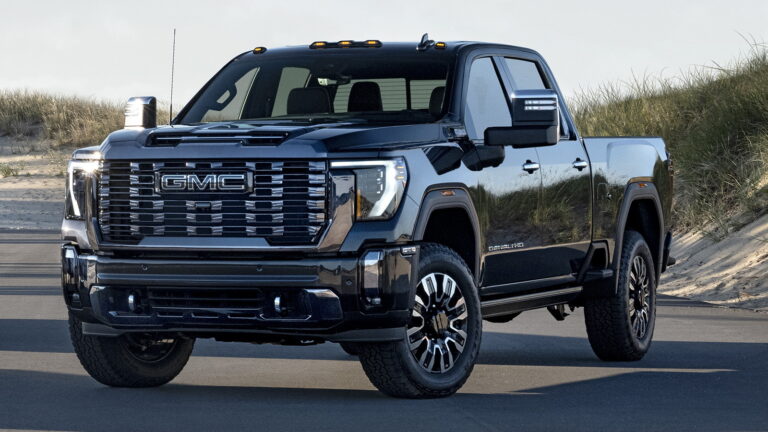
Heavy-Duty Pickup Trucks (HD)
When maximum towing, hauling, and sheer ruggedness are required, heavy-duty trucks step up. These are built for serious work, often featuring more robust frames, stronger axles, and larger diesel engines.
- Pros: Unmatched towing and payload capacities (often exceeding 30,000 lbs for towing), extreme durability, ideal for commercial use or towing large RVs/fifth-wheel trailers.
- Cons: Very large and cumbersome for daily driving, significantly higher purchase price, poorer fuel economy, rougher ride when unloaded.
- Examples: Ford F-250/F-350, Ram 2500/3500, Chevrolet Silverado 2500/3500 HD, GMC Sierra 2500/3500 HD.
Emerging Categories: Electric Trucks and Compact Trucks
The truck market is evolving rapidly. Electric trucks are gaining traction, offering impressive torque, lower operating costs, and innovative features. Compact trucks, smaller than mid-size, are also making a comeback for urban utility.
- Electric Trucks: Ford F-150 Lightning, Rivian R1T, Chevrolet Silverado EV. These offer instant torque, quiet operation, and potentially lower long-term fuel/maintenance costs. Range and charging infrastructure are key considerations.
- Compact Trucks: Ford Maverick, Hyundai Santa Cruz. These blend SUV comfort with open-bed utility, offering car-like driving dynamics and excellent fuel economy for light-duty tasks.
Key Features and Specifications to Evaluate
Once you’ve identified your primary needs and preferred truck category, it’s time to dive into the specifics. The devil is in the details, and understanding these features will help you differentiate between models.
Engine Options (Gas, Diesel, Hybrid, Electric)
The engine is the heart of your truck, directly impacting its performance, towing capability, and fuel efficiency.
- Gasoline Engines: Most common, available in various sizes (V6, V8, turbocharged I4/V6). Generally more affordable upfront and quieter.
- Diesel Engines: Known for their high torque, exceptional towing power, and often better fuel economy under load. They are typically more expensive to buy and maintain but offer incredible longevity.
- Hybrid Engines: A growing option, combining a gasoline engine with an electric motor to improve fuel efficiency, especially in city driving. The Ford F-150 PowerBoost is a prime example.
- Electric Powertrains: Offer instant, massive torque, silent operation, and zero tailpipe emissions. Range anxiety and charging infrastructure are factors to consider.
Drivetrain (2WD, 4WD, AWD)
Your drivetrain choice depends heavily on your driving environment and intended use.
- 2-Wheel Drive (2WD): Typically rear-wheel drive (RWD) for trucks. More affordable, lighter, and slightly better fuel economy. Ideal for paved roads and light hauling where traction isn’t a major concern.
- 4-Wheel Drive (4WD): Essential for off-roading, snow, mud, or slippery conditions. Provides enhanced traction by sending power to all four wheels. Often comes with high and low range settings.
- All-Wheel Drive (AWD): Less common in traditional trucks, but found in some compact models or performance trucks. Continuously manages power distribution to all wheels for improved on-road traction in various conditions, but generally not as robust for extreme off-roading as 4WD.
Cab Configurations (Regular, Extended, Crew)
The cab style determines passenger capacity and interior space.
- Regular Cab: Single row of seats, typically seating 2-3 passengers. Best for maximum bed length or if you rarely carry passengers.
- Extended Cab (or Quad Cab, Double Cab): Offers a smaller rear seat area, often with rear-hinged doors. Good for occasional rear passengers or extra interior storage.
- Crew Cab (or SuperCrew, CrewMax): Four full-size doors and ample rear-seat legroom, making it the most comfortable for multiple passengers. Often the preferred choice for families, though it typically means a shorter bed length.
Bed Lengths
Truck beds come in various lengths, impacting cargo capacity and overall vehicle maneuverability.
- Short Bed (approx. 5.5 ft): Most common with crew cabs, easier to park.
- Standard Bed (approx. 6.5 ft): A good balance, often available with extended or regular cabs.
- Long Bed (approx. 8 ft): Maximum cargo capacity, usually paired with regular cabs or heavy-duty trucks. Best for hauling full sheets of plywood or long lumber.
Technology and Safety Features
Modern trucks are loaded with technology, from advanced infotainment systems to sophisticated driver-assist features. These enhance comfort, convenience, and safety.
- Infotainment: Large touchscreens, Apple CarPlay/Android Auto, navigation, premium audio systems.
- Driver-Assist Systems (ADAS): Adaptive cruise control, lane-keeping assist, blind-spot monitoring, automatic emergency braking, 360-degree cameras. These features can significantly improve safety and reduce driver fatigue.
- External Link: For detailed safety ratings and crash test information, always consult reputable sources like the National Highway Traffic Safety Administration (NHTSA) at .
Reliability and Resale Value
These factors contribute significantly to the long-term cost of ownership and overall satisfaction.
- Reliability: Research long-term reliability ratings from consumer reports and automotive publications. Brands like Toyota often excel here, but many full-size trucks are known for their durability.
- Resale Value: Trucks generally hold their value well, but some models and configurations perform better than others. A high resale value means you’ll recoup more of your initial investment when it’s time to sell or trade in.
- Pro Tip: Look for brands and models with a strong track record of dependability. A truck that costs less upfront but constantly needs repairs will quickly become more expensive.
New vs. Used: Making the Smart Choice
Once you have a clear idea of what truck you need, the next big question is whether to buy new or used. Both options have distinct advantages and disadvantages.
- Buying New:
- Pros: Full factory warranty, latest technology and safety features, customizable options, no prior owner history to worry about. You get that "new car smell" and the peace of mind of a fresh start.
- Cons: Higher upfront cost, significant depreciation in the first few years, potentially higher insurance premiums.
- Buying Used:
- Pros: Significantly lower purchase price, depreciation has already occurred, wider selection of models/years within a given budget, lower insurance costs.
- Cons: No factory warranty (or limited remaining), potential for unknown maintenance issues, older technology, finding the exact configuration can be harder.
If you’re considering a used truck, thorough due diligence is paramount. Always get a pre-purchase inspection from an independent mechanic and obtain a vehicle history report (e.g., CarFax or AutoCheck). Common mistakes to avoid include skipping the inspection or relying solely on the seller’s word. For more in-depth advice on this, you might find our article helpful.
Pro Tips for Your Truck Buying Journey
Having guided countless individuals through this process, I’ve compiled some essential tips to ensure a smooth and successful truck purchase.
- Test Drive Extensively: Don’t just take it around the block. Drive the truck in conditions similar to how you’ll use it. If you’re towing, try to test drive with a trailer. Pay attention to ride comfort, visibility, handling, and interior ergonomics.
- Consider Aftermarket Accessories: Many trucks are designed to be customized. Think about how aftermarket bed covers, running boards, or off-road modifications might factor into your budget and decision.
- Don’t Rush the Decision: Buying a truck is a significant investment. Take your time, do your research, and compare multiple models and dealerships. Patience pays off.
- Read Reviews from Multiple Sources: Consult reputable automotive journalists, consumer reports, and owner forums. Look for consistent feedback on reliability, common issues, and user satisfaction.
- Negotiate Wisely: Be prepared to negotiate the price, especially on new trucks. Research the fair market value beforehand and be ready to walk away if the deal isn’t right.
Conclusion: The Best Truck is Your Truck
Ultimately, the question of "What truck is the best to buy?" has a nuanced answer: it’s the truck that best fits your specific requirements, budget, and lifestyle. There’s a perfect pickup out there for everyone, whether it’s a nimble mid-size for urban adventures, a robust full-size for heavy lifting, or a cutting-edge electric model for a sustainable future.
By taking the time to thoroughly assess your needs, understanding the different truck categories, and evaluating key features, you’ll be well-equipped to make an informed decision. Don’t be swayed by marketing hype or what your neighbor drives. Focus on what truly matters to you.
We hope this comprehensive guide has provided you with the clarity and confidence needed to embark on your truck-buying journey. Now, go forth, research those models, visit some dealerships, and find the truck that’s truly "best" for you!