Unleashing the Beast: Your Ultimate Guide to Finding One Ton Pickup Trucks For Sale
Unleashing the Beast: Your Ultimate Guide to Finding One Ton Pickup Trucks For Sale Lmctruck.Guidemechanic.com
The roar of a powerful engine, the sheer presence on the road, the undeniable capability to haul almost anything you throw at it – there’s something inherently magnetic about a one-ton pickup truck. These aren’t just vehicles; they are workhorses, adventure companions, and the backbone for countless businesses and personal projects. If you’re in the market for unparalleled strength and unwavering reliability, then understanding the world of one ton pickup trucks for sale is your first critical step.
This comprehensive guide is designed to be your definitive resource, whether you’re a seasoned truck owner looking to upgrade, a commercial operator expanding your fleet, or an RVer dreaming of towing your home away from home with ease. We’ll delve deep into what makes these beasts tick, what to look for, and how to make the smartest purchase. Get ready to explore every facet of these incredible machines, ensuring you find the perfect one-ton truck that not only meets but exceeds your expectations.
Unleashing the Beast: Your Ultimate Guide to Finding One Ton Pickup Trucks For Sale
What Exactly is a One-Ton Pickup Truck? Decoding the Heavy-Duty Classification
When you hear "one-ton pickup truck," you might envision a truck capable of carrying precisely 2,000 pounds. While that was the historical basis for the "ton" classification many decades ago, modern one-ton trucks have far surpassed that original benchmark in terms of capability. Today, the "ton" designation is more of a traditional nameplate than a literal representation of payload capacity.
In contemporary automotive terms, a one-ton pickup refers to a heavy-duty truck, typically falling into the Class 3 category based on its Gross Vehicle Weight Rating (GVWR). The GVWR is the maximum permissible weight of the vehicle, including the vehicle itself, passengers, cargo, and any accessories. For a Class 3 truck, this usually ranges from 10,001 to 14,000 pounds. This classification immediately sets them apart from their lighter half-ton (Class 2a) and three-quarter-ton (Class 2b) counterparts.
The true differentiator for these trucks lies in their robust construction. They feature significantly stronger frames, heavier-duty suspension components, larger brakes, more powerful engine and transmission options, and often dual rear wheels (Dually) for enhanced stability and weight distribution. These engineering upgrades are precisely what allow them to handle colossal payloads and tow immense trailers, making them indispensable for specialized tasks that would overwhelm lighter trucks.
Why Choose a One-Ton Pickup? The Power and Purpose Unveiled
The decision to invest in a one-ton pickup isn’t made lightly; it’s a commitment to supreme capability. People seek out one ton pickup trucks for sale because they demand performance that goes beyond everyday needs. Based on my experience, there are several compelling reasons why these trucks stand head and shoulders above the rest for specific applications.
Firstly, their superior towing capacity is often the primary draw. We’re talking about the ability to comfortably tow large fifth-wheel RVs, multi-horse trailers, heavy equipment, or substantial commercial trailers. These trucks are engineered with specialized towing packages, often including integrated trailer brake controllers, robust hitches (including gooseneck and fifth-wheel preparations), and enhanced cooling systems to manage the heat generated by such strenuous work. Trying to tow these loads with a smaller truck is not only dangerous but can also severely damage your vehicle.
Secondly, the unmatched payload capacity is crucial for carrying heavy loads within the truck bed itself. Think about hauling pallets of bricks, a fully loaded utility bed with tools and equipment, or a slide-in camper. A one-ton truck is built to handle these weights without squatting excessively or compromising steering and braking performance. This incredible capacity makes them vital for construction crews, landscapers, farmers, and anyone who regularly transports substantial materials.
Beyond their raw strength, one-ton trucks are built for durability and longevity. Their heavy-duty components are designed to withstand constant stress and demanding conditions, often leading to a longer service life compared to lighter-duty vehicles, especially when performing strenuous tasks. This robustness translates into less downtime and greater reliability over years of hard work.
Finally, these trucks serve a diverse range of applications. For RV enthusiasts, they offer the peace of mind to safely tow large luxury fifth-wheel trailers across the country. For businesses, they are indispensable for transporting materials, tools, and equipment to job sites. And for those who simply want the ultimate in capability, a one-ton truck offers a sense of preparedness for any task, big or small. If your hauling or towing needs regularly push the limits of a three-quarter-ton truck, or if you simply want a significant margin of safety and capability, then a one-ton is not just a want, but a necessity.
Key Features to Look for in One-Ton Pickup Trucks For Sale
When you start browsing one ton pickup trucks for sale, the sheer number of configurations and options can feel overwhelming. To make an informed decision, it’s essential to understand the core features that define these powerful machines and how they impact performance, efficiency, and your overall ownership experience.
The engine is often the heart of a heavy-duty truck, and you’ll typically find two main choices: diesel or gasoline. Diesel engines, like the Cummins in Ram, Power Stroke in Ford, or Duramax in GM, are legendary for their immense torque, exceptional towing capabilities, and often better fuel economy when under load. They are generally more expensive upfront but offer superior longevity and resale value for heavy-duty applications. Gasoline engines, while still powerful, offer a lower initial cost and can be more economical for lighter use, but they won’t match a diesel’s pulling power for extreme tasks. Pro tips from us: If you’re towing regularly at or near maximum capacity, diesel is almost always the superior choice.
Next, consider the drivetrain: 2WD vs. 4WD. A 2WD truck is lighter, slightly more fuel-efficient, and generally less expensive, making it suitable for paved roads and light-duty work. However, for off-road conditions, inclement weather, or pulling heavy loads up slippery ramps, 4WD is indispensable. Most heavy-duty truck buyers opt for 4WD for its versatility and enhanced traction.
Axle ratios are another critical, yet often overlooked, specification. A lower numerical ratio (e.g., 3.73) generally offers better fuel economy at highway speeds, while a higher numerical ratio (e.g., 4.10) provides more torque for towing and hauling, albeit with slightly reduced fuel efficiency. The right axle ratio depends heavily on your primary use case.
One of the most visually distinctive features is the choice between a Single Rear Wheel (SRW) and a Dually (dual rear wheels) configuration. A Dually truck features two wheels on each side of the rear axle, providing a wider stance, increased stability, and significantly higher payload and towing capacities. This extra stability is invaluable when towing extremely heavy or wide trailers, as it reduces sway. However, a Dually is wider, making it less maneuverable in tight spaces and potentially more expensive for tire replacement. SRW one-ton trucks still offer impressive capabilities but are more practical for everyday driving when extreme capacities aren’t needed.
Finally, think about cab configurations and bed lengths. You can choose from Regular Cab (two doors, single row of seats), Extended Cab (smaller rear seats, suicide doors or small hinged doors), or Crew Cab (four full-size doors, spacious rear seating). Bed lengths typically range from 6.5 feet to 8 feet. Your choice here depends on your passenger needs and the type of cargo you’ll be carrying. Modern one-ton trucks also come equipped with advanced technology and safety features, including large infotainment screens, driver-assist systems like adaptive cruise control, lane-keeping assist, and 360-degree cameras, which can greatly enhance the driving and towing experience.
Top Contenders: Popular One-Ton Pickup Truck Models
When you’re searching for one ton pickup trucks for sale, you’ll quickly notice that a few legendary names dominate the market. These manufacturers have refined their heavy-duty offerings over decades, each bringing unique strengths and loyal followings. Understanding what each brand offers can help you narrow down your choices.
The Ford F-350 Super Duty is an undisputed titan in the heavy-duty segment. Ford’s "Built Ford Tough" ethos is evident in its robust frame, powerful engine options (including the formidable Power Stroke diesel and the potent Godzilla V8 gasoline engine), and innovative features. Ford is often praised for its extensive technology suite, including features like Pro Trailer Backup Assist, which simplifies the daunting task of backing up a trailer, and available Pro Power Onboard for job site electricity. Its towing and payload figures are consistently among the best in the class, making it a go-to for serious haulers.
The Ram 3500 Heavy Duty stands out for its luxurious interiors and the legendary Cummins turbo-diesel engine. Ram has invested heavily in creating cabins that rival luxury cars, offering premium materials, large touchscreens, and a comfortable ride quality that belies its workhorse capabilities. The available High Output Cummins engine delivers astonishing torque figures, allowing the Ram 3500 to pull some of the heaviest loads imaginable. For those who spend long hours in their truck and value comfort alongside capability, the Ram 3500 often presents an irresistible package.
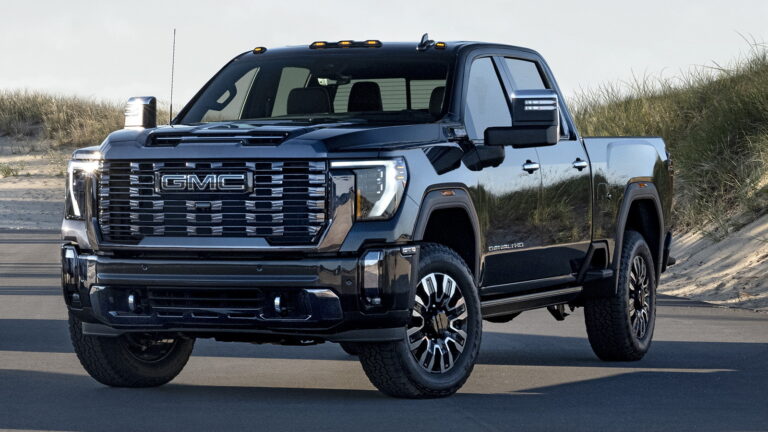
Rounding out the "Big Three" are the Chevrolet Silverado 3500 HD and its upscale sibling, the GMC Sierra 3500 HD. These trucks share a common platform but offer distinct styling and trim levels. Both are powered by robust engine options, including the Duramax turbo-diesel and gasoline V8s, known for their reliability and smooth power delivery. General Motors trucks are celebrated for their sophisticated towing technologies, such as the multi-view camera systems that provide up to 15 different camera views to aid in trailering, and innovative features like the MultiPro or Multi-Flex tailgate. GMC, in particular, often targets a more premium market with refined aesthetics and exclusive features.
Each of these models offers a vast array of trim levels, engine choices, and configurations, allowing buyers to tailor their truck precisely to their needs. Common mistakes to avoid are simply choosing a brand based on loyalty without fully evaluating the specific features and capabilities offered by competitors for your particular use case. It’s always wise to test drive multiple brands and compare their specifications side-by-side.
New vs. Used One-Ton Pickup Trucks For Sale: Making the Right Choice
Deciding between a new or used heavy-duty truck is one of the biggest dilemmas for buyers. Both options present distinct advantages and disadvantages, and the "right" choice depends heavily on your budget, priorities, and risk tolerance when looking at one ton pickup trucks for sale.
Opting for a new one-ton pickup truck offers several compelling benefits. You get the latest technology, including advanced safety features, infotainment systems, and powertrain innovations that enhance performance and efficiency. A new truck comes with a factory warranty, providing peace of mind against unexpected repairs during the initial ownership period. You also have the freedom to customize your truck with specific trim levels, options, and colors straight from the dealership. However, the most significant drawback of a new truck is its higher upfront cost and rapid depreciation, especially in the first few years.
Choosing a used one-ton pickup truck, on the other hand, can lead to substantial cost savings. The initial depreciation hit has already been absorbed by the previous owner, meaning you can often get a much better-equipped truck for the same price as a base model new truck. The used market also offers a wider selection of model years and configurations, potentially allowing you to find a truck with features that might no longer be available in current models. The primary risks associated with used trucks include the potential for unknown maintenance history, wear and tear, and the absence of a factory warranty.
Pro tips from us: If you’re considering a used truck, always prioritize a comprehensive pre-purchase inspection by an independent mechanic specializing in heavy-duty vehicles. This inspection can uncover hidden issues that might not be apparent during a test drive. Look for trucks with detailed service records, which indicate responsible previous ownership. Certified Pre-Owned (CPO) programs offered by dealerships can bridge the gap between new and used, providing a manufacturer-backed warranty and a rigorous inspection process for used vehicles. Weigh your budget against your desire for the latest features and warranty coverage. For many, a well-maintained used one-ton truck offers incredible value and capability without the new car price tag.
The Buying Process: What You Need to Know
Once you’ve decided on the type of one-ton truck you need, navigating the buying process for one ton pickup trucks for sale requires careful planning and execution. It’s a significant investment, and taking the right steps can save you money and headaches in the long run.
Start with budgeting and financing. Heavy-duty trucks can be expensive, so determine a realistic budget that includes not just the purchase price but also insurance, registration, and potential modifications. Research loan options from banks, credit unions, and dealership financing. Understand interest rates and loan terms before you walk onto a lot.
Next, identify where to look for your truck. Authorized dealerships offer new models and a selection of used trucks, often with warranty options. Online marketplaces (like AutoTrader, Cars.com, or even Facebook Marketplace for private sellers) provide a vast inventory. Private sellers can sometimes offer lower prices, but require more due diligence on your part regarding vehicle history and condition.
When you find a potential candidate, a test drive checklist is essential. Don’t just drive around the block. Pay attention to engine performance, transmission shifts (look for smoothness and responsiveness), brake feel, steering precision, and suspension comfort. If possible, test the truck with a similar load or trailer to what you intend to haul. Listen for any unusual noises, feel for vibrations, and check all electrical components.
An absolute necessity, especially for used trucks, is a pre-purchase inspection (PPI) by a trusted independent mechanic. This cannot be stressed enough. A PPI can uncover costly issues like worn out components, rust, or engine/transmission problems that might not be visible during a quick glance. Based on my experience, skipping this step is one of the common mistakes buyers make, leading to unexpected repair bills down the road.
Finally, be prepared for negotiation strategies. Do your research on market values for similar trucks to know what a fair price is. Be ready to walk away if the deal isn’t right. For new trucks, negotiate the "out-the-door" price, including all fees. For used trucks, the PPI report can be a powerful negotiation tool if it reveals needed repairs.
Ownership Essentials: Maintenance and Common Mistakes
Owning a one-ton pickup truck is a commitment, and ensuring its longevity and optimal performance hinges on diligent maintenance. These powerful machines work hard, and their specific needs differ from lighter vehicles. Overlooking these essentials is a common mistake that can lead to costly repairs and reduced lifespan.
Regular service intervals are paramount, especially for diesel engines. Diesel trucks often have more frequent oil changes, fuel filter replacements, and other specialized maintenance requirements compared to gasoline engines. Adhering strictly to the manufacturer’s recommended service schedule, found in your owner’s manual, is crucial. This includes checking and topping off all fluids, inspecting belts and hoses, and ensuring all filters are clean. For more in-depth advice, you might find our guide on Essential Maintenance Tips for Your Heavy-Duty Truck particularly useful. (Internal Link Example)
Tire maintenance is critical, especially when dealing with heavy loads. One-ton trucks rely on robust tires designed to support significant weight. Regularly check tire pressure (refer to the sticker on your driver’s side door jamb for recommended pressures, especially when loaded), rotate tires as recommended, and inspect for uneven wear or damage. Proper tire inflation is vital for safety, fuel efficiency, and tire longevity.
The brake system on a one-ton truck is also under immense strain, particularly when towing. Regular inspections of brake pads, rotors, and fluid levels are non-negotiable. Don’t wait until you hear grinding or feel a spongy pedal; proactive checks can prevent dangerous situations and expensive component failures.
Common mistakes to avoid when owning a one-ton truck include:
- Overloading: Always stay within your truck’s Gross Vehicle Weight Rating (GVWR) and Gross Combined Weight Rating (GCWR). Exceeding these limits is dangerous and puts undue stress on every component of your truck.
- Neglecting maintenance: Skipping oil changes, ignoring warning lights, or delaying repairs will inevitably lead to more significant, more expensive problems.
- Improper towing setups: Using the wrong hitch, failing to balance your trailer, or not utilizing a weight distribution hitch when necessary can compromise safety and vehicle stability.
- Ignoring fluid changes: Transmission fluid, differential fluid, and coolant all have service intervals. These fluids lubricate and protect vital components; neglecting them is a recipe for disaster.
By staying on top of these maintenance routines and avoiding common pitfalls, your one-ton pickup will serve you reliably for years to come, truly earning its place as a dependable workhorse. For deeper technical insights, we recommend visiting a reputable automotive resource like Edmunds (https://www.edmunds.com/) for detailed specifications and reviews of various truck models. (External Link Example)
The Future of One-Ton Pickups: What’s on the Horizon?
The heavy-duty truck segment, much like the broader automotive industry, is in a constant state of evolution. As you look at one ton pickup trucks for sale today, it’s worth considering the exciting innovations that are shaping the future of these powerful machines.
One of the most significant shifts is the growing emphasis on electrification. While fully electric one-ton trucks might seem like a distant dream given their massive power demands, manufacturers are actively developing solutions. We’ve already seen glimpses of electric heavy-duty concepts from companies like Ford with their F-Series electric platforms, and it’s only a matter of time before hybrid and fully electric one-ton options become more mainstream. These will offer immense torque, quieter operation, and potentially lower running costs, especially for fleets operating in urban environments.
Advanced driver-assist systems (ADAS) are becoming more sophisticated. Features like enhanced adaptive cruise control, lane-keeping assist, blind-spot monitoring with trailer coverage, and even autonomous parking features are making these large trucks safer and easier to maneuver. Expect these technologies to become standard, further reducing driver fatigue and enhancing safety on long hauls or busy job sites.
Manufacturers are also continually pushing the boundaries of comfort and luxury features. The interiors of modern one-ton trucks already rival many luxury sedans, and this trend will continue. Expect even larger infotainment screens, more premium materials, advanced connectivity options, and increasingly comfortable seating designed for long hours on the road. The line between a work vehicle and a personal luxury cruiser will continue to blur.
Finally, there’s a strong push towards sustainability efforts and greater efficiency. While raw power will always be a priority, engineers are constantly finding ways to extract more power from smaller displacements, improve fuel economy, and reduce emissions through advanced engine designs, lighter materials, and aerodynamic improvements. The future of one-ton pickups promises to be a fascinating blend of brute strength, intelligent technology, and environmental consciousness.
Conclusion: Finding Your Ultimate Workhorse Among One Ton Pickup Trucks For Sale
Embarking on the journey to find the perfect one-ton pickup truck is an exciting endeavor. As we’ve explored, these aren’t just vehicles; they are specialized tools designed for the toughest jobs, the heaviest loads, and the most demanding adventures. From understanding their robust classification and superior capabilities to navigating the new versus used market and mastering essential maintenance, you are now equipped with the comprehensive knowledge needed to make a truly informed decision.
Remember, whether you prioritize the raw power of a diesel, the advanced technology of a new model, or the incredible value of a well-maintained used option, the market for one ton pickup trucks for sale offers a diverse landscape of choices. By carefully considering your specific needs, conducting thorough research, and adhering to our expert tips, you’ll undoubtedly find the ultimate heavy-duty partner that will serve you faithfully for years to come. Your next powerful workhorse is out there, ready to tackle anything you throw its way.