The Ultimate Guide: Will A Cap From A 2006 Chevy Fit On A 2010? Unpacking Truck Cap Compatibility
The Ultimate Guide: Will A Cap From A 2006 Chevy Fit On A 2010? Unpacking Truck Cap Compatibility Lmctruck.Guidemechanic.com
You’re a proud Chevy truck owner, perhaps looking to enhance your vehicle’s utility or secure your cargo. The idea of adding a truck bed cap, also known as a camper shell or topper, is appealing. But then the question arises, especially if you’re eyeing a great deal on a used cap: "Will a cap from a 2006 Chevy fit on a 2010?" This is a remarkably common and vital question for countless truck enthusiasts and DIYers.
Based on my extensive experience in the automotive aftermarket and working with various truck generations, the short answer is usually no, not without significant compromises. However, the full story is much more nuanced, involving critical differences in vehicle design, specific dimensions, and the impact these have on aesthetics and functionality. This comprehensive guide will delve deep into why compatibility is often an issue, what factors you absolutely must consider, and how to ensure you get the perfect fit for your 2010 Chevy.
The Ultimate Guide: Will A Cap From A 2006 Chevy Fit On A 2010? Unpacking Truck Cap Compatibility
Understanding the "Cap" in Question: More Than Just a Cover
When we talk about a "cap" for a truck, we’re almost exclusively referring to a truck bed cap, also known as a camper shell, topper, or canopy. These enclosed units sit atop the truck’s bed rails, providing weather protection and security for anything stored within. They transform an open pickup bed into a secure, often weather-tight, storage or even sleeping area.
The proper fit of a truck cap is paramount. It’s not just about aesthetics; it impacts the cap’s ability to seal out water, prevent theft, and remain securely attached to your vehicle during driving. An ill-fitting cap can lead to a host of problems that can quickly turn a good deal into a costly headache.
The Crucial Divide: 2006 Chevy vs. 2010 Chevy Body Styles
The primary reason for the general incompatibility between a 2006 Chevy truck cap and a 2010 Chevy truck lies in a significant generational shift in General Motors’ truck platforms. Specifically, we’re talking about the transition from the GMT800 platform (which includes the 2006 model year) to the GMT900 platform (which includes the 2010 model year).
This wasn’t just a minor facelift; it was a complete redesign from the ground up. These platform changes brought about significant alterations in body dimensions, styling cues, and manufacturing processes. Understanding these differences is the cornerstone of comprehending truck cap fitment.
The 2006 Chevy (GMT800 Platform): A Classic Era
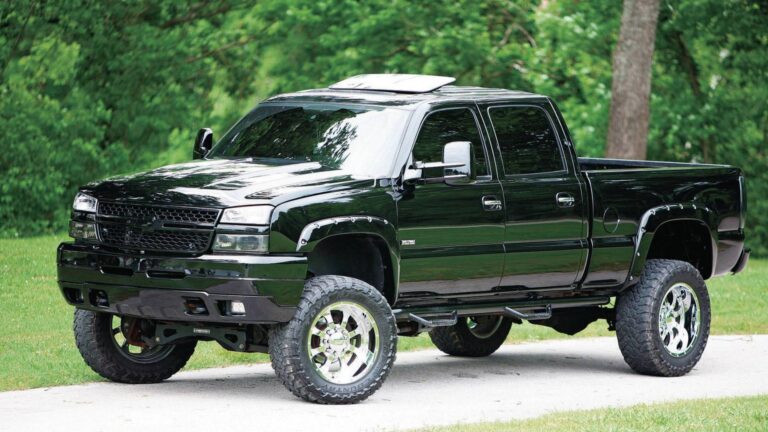
The 2006 Chevy Silverado (and its GMC Sierra counterpart) belonged to the GMT800 platform. This generation, produced from the late 1990s through 2007 (with some "Classic" models in 2007), featured a distinct body style. These trucks are known for their somewhat more squared-off lines and specific bed dimensions that were consistent across the platform.
The cab-to-bed interface, the height of the bed rails, and the overall contour of the bed itself were all designed according to the GMT800 specifications. Caps manufactured for this era were meticulously crafted to hug these specific dimensions, ensuring a flush, watertight seal and a visually integrated appearance.
The 2010 Chevy (GMT900 Platform): A New Era of Design
The 2010 Chevy Silverado (and GMC Sierra) represented the GMT900 platform, which debuted for the 2007 model year. This generation marked a significant departure from its predecessor. The GMT900 trucks boasted a more aerodynamic, sculpted, and modern design. This included redesigned front fascias, updated interiors, and, most importantly for our discussion, completely revised truck bed dimensions and body lines.
The bed rails on a GMT900 truck are typically higher, and their contours are different. The overall width and length of the bed might have subtle yet critical variations. Furthermore, the cab’s rear profile, which a cap needs to align with for proper aesthetics and sealing, also changed. These changes, though seemingly minor to the casual observer, create substantial fitment challenges for caps designed for the previous generation.
Key Dimensions That Dictate Truck Cap Fitment
To truly understand why a 2006 cap won’t typically fit a 2010 model, we need to break down the specific dimensions that cap manufacturers meticulously account for. Even a fraction of an inch can lead to a poor fit.
1. Bed Length
This is arguably the most straightforward dimension, but it’s still crucial. Truck beds come in various lengths: short bed, standard bed, and long bed. While a 2006 Chevy and a 2010 Chevy might both offer, for example, a "short bed," the exact measurements can differ slightly. More importantly, a cap designed for a 6.5-foot bed will never fit an 8-foot bed, regardless of the year.
Pro tip from us: Always measure your truck’s bed length from the inside of the bulkhead (the wall closest to the cab) to the inside of the tailgate when closed. Do not rely solely on advertised bed lengths, as they can sometimes be rounded.
2. Bed Width
The width of the truck bed is equally critical. This isn’t just a single measurement. Cap manufacturers consider:
- Width at the bulkhead: Where the cap meets the front of the bed.
- Width at the tailgate: Where the cap meets the rear of the bed.
- Overall width over the bed rails: This determines how the cap sits on top.
The GMT800 and GMT900 platforms have different overall bed widths and, more importantly, different contours and tapers. A cap from a 2006 might be too narrow or too wide in certain sections for a 2010 bed, leading to unsightly gaps or an inability to sit flush.
3. Bed Rail Height and Contour
This is where many compatibility issues arise. The height of the bed rails from the truck’s frame, and the specific shape or contour of the top surface of these rails, are vastly different between the two generations.
- A cap designed for a lower rail height on a 2006 model will sit too low on a 2010 with higher rails, creating a significant gap between the cap and the cab.
- Conversely, a cap designed for higher rails might not clear the cab of a 2006 truck.
Furthermore, the actual shape of the bed rail where the cap clamps down can vary. Modern truck beds often have plastic or composite rail caps that influence how a cap seals and clamps.
4. Tailgate Clearance and Contour
The rear of the cap must align perfectly with the tailgate. This includes:
- Tailgate height: The cap’s rear door needs to clear the top of the tailgate when it’s closed and seal properly against it.
- Tailgate width and contour: The tailgate on a 2010 Chevy has a different design and curvature compared to a 2006 model. An older cap’s rear door might not seal flush, creating gaps that allow water and dust to enter.
5. Cab Height and Contour (Cab-High vs. Raised-Roof Caps)
For "cab-high" caps (those designed to match the height of the truck’s cab), the precise height and the subtle curve of the cab’s roofline are vital. A 2006 cap might have been designed to flow seamlessly with the GMT800 cab. When placed on a 2010 GMT900 truck, it will almost certainly fail to align properly, creating an awkward visual gap or an overhang.
- This mismatch is not just aesthetic. It can create wind noise and even affect aerodynamics.
Why a Direct Swap is Unlikely (and Often Ill-Advised)
Given the fundamental differences between the GMT800 and GMT900 platforms, a direct, seamless swap of a truck cap from a 2006 Chevy to a 2010 Chevy is highly improbable. The dimensional discrepancies are simply too great for a "perfect fit" straight out of the box.
Aesthetic Compromises
Even if you could somehow force an older cap onto a newer truck, the visual result would be jarring. There would likely be:
- Unattractive gaps: Between the cap and the bed rails, or between the cap and the cab.
- Overhangs: The cap might extend past the bed in some areas or fall short in others.
- Mismatched lines: The contours of the cap would clash with the sleeker, more modern lines of the 2010 truck.
Based on my experience, an ill-fitting cap detracts significantly from the truck’s appearance and resale value. It simply looks "wrong."
Functional Issues
Beyond aesthetics, the functional problems are even more critical:
- Water Leaks: The most common issue. Without a proper, snug seal against the bed rails and tailgate, water will inevitably seep into your truck bed. This can damage cargo, lead to mold, and even cause rust in the bed itself.
- Dust and Debris Intrusion: Similar to water, dust, dirt, and road grime will easily find their way into an unsealed bed, making it difficult to keep your cargo clean.
- Security Concerns: An improperly mounted or ill-fitting cap can be easier to pry open, compromising the security of your stored items. The locking mechanisms might not engage correctly if the cap isn’t sitting flush.
- Mounting Instability: If the cap cannot be securely clamped to the bed rails, it poses a safety risk. It could shift during driving, or even detach at high speeds or over rough terrain. This is a serious safety hazard for you and others on the road.
The DIYer’s Dilemma: Can You Really Make It Work?
Some determined DIYers might consider modifying an older cap to fit a newer truck. This typically involves:
- Adding Shims or Spacers: To fill gaps between the cap and bed rails, or to adjust height.
- Custom Weather Stripping: Applying thicker or different profiles of weather stripping to try and create a seal.
- Modifying Mounting Hardware: Fabricating custom clamps or brackets to secure the cap.
- Bodywork Modifications: In extreme cases, attempting to cut or reshape parts of the cap, which is usually irreversible and highly specialized work.
Pro tips from us: While such modifications are technically possible, they are rarely advisable.
- Cost and Time: The cost of materials, specialized tools, and the sheer amount of time required to achieve a decent fit often outweigh the savings of buying a used, incompatible cap.
- Compromised Integrity: Cutting or significantly altering a fiberglass or aluminum cap can compromise its structural integrity, leading to cracks, leaks, or even failure.
- Unsatisfactory Results: Even with extensive effort, the result is often a cap that "works" but still looks cobbled together, leaks occasionally, or isn’t as secure as a purpose-built unit.
Based on my experience, chasing a "bargain" on an ill-fitting cap often leads to more frustration and expense than simply investing in the correct one from the start.
The Right Way: How to Find the Correct Cap for Your 2010 Chevy
Instead of trying to force an old cap onto a new truck, the smart and ultimately more cost-effective approach is to find a cap specifically designed for your 2010 Chevy Silverado or Sierra.
1. Identify Your Specific Truck Model and Bed Length
This is the absolute first step. You need to know:
- Year: 2010
- Make: Chevrolet (or GMC)
- Model: Silverado 1500, 2500HD, 3500HD (the heavy-duty models also have specific bed dimensions).
- Cab Style: Regular Cab, Extended Cab, Crew Cab (sometimes influences cap design near the cab).
- Bed Length: Short Bed (e.g., 5’8"), Standard Bed (e.g., 6’6"), Long Bed (e.g., 8′).
You can often find this information on your truck’s door jamb sticker, owner’s manual, or by accurately measuring your bed. For example, you might be looking for a "Cap for a 2010 Chevy Silverado 1500 Crew Cab Short Bed."
2. Accurately Measure Your Truck Bed
Even with the correct year, make, and model, taking your own measurements is a crucial double-check.
- Internal Length: From the bulkhead (front wall) to the inside of the closed tailgate.
- Internal Width: At the front, middle, and rear of the bed.
- Bed Rail Height: From the top of the bed rail down to the floor of the bed.
- Cab Height: If considering a cab-high cap, measure from the top of the bed rail up to the highest point of your truck’s cab.
These measurements will help you confirm fitment, especially if you’re buying a used cap from an individual.
3. Sources for Finding the Right Cap
- New Caps:
- Authorized Dealers: Truck accessory shops, dealerships. They can order brand-new caps from reputable manufacturers like Leer, A.R.E., Snugtop, and ATC. This guarantees a perfect fit, often comes with a warranty, and allows for paint matching.
- Online Retailers: Many online stores specialize in truck accessories and can guide you to the correct cap based on your truck’s specifications.
- Used Caps:
- Local Classifieds & Online Marketplaces (e.g., Craigslist, Facebook Marketplace): A great place to find deals. Be diligent! Always verify the cap’s original vehicle (year, make, model, bed length) and inspect it thoroughly in person.
- Truck Salvage Yards: Sometimes you can find caps here, but condition can be highly variable.
- Dedicated Truck Cap Resellers: Some businesses specialize in buying and selling used truck caps. They often have a good inventory and knowledge of fitment.
4. What to Look for When Buying a Used Cap for Your 2010 Chevy
If you opt for a used cap, careful inspection is essential:
- Original Fitment: Confirm it was specifically made for a 2007-2013 (or 2014 "Classic" HD) Chevy Silverado/Sierra with the exact same bed length as yours. This is the GMT900 platform.
- Condition of Fiberglass/Aluminum: Check for cracks, especially around mounting points, corners, and windows. Small stress cracks can expand.
- Windows and Seals: Ensure windows operate smoothly, aren’t cracked, and their seals are intact.
- Rear Door & Latches: Verify the rear door opens and closes properly, and the latches/locks function. Check for missing keys.
- Weather Stripping: Inspect the rubber seal along the bottom edge of the cap. It should be pliable, not cracked or deteriorated. Replacements can be purchased, but factor that into your cost.
- Interior Condition: Look for water damage, mold, or excessive wear.
- Mounting Hardware: Does it come with the necessary clamps and hardware? If not, you’ll need to source these separately.
Beyond Fitment: Other Considerations When Buying a Cap
Once you’ve ensured compatibility, there are other important factors to consider for your 2010 Chevy:
Material
- Fiberglass: Most common. Offers a sleek, paint-matchable finish. Generally durable and weather-resistant.
- Aluminum: Lighter, often more affordable, and very robust. Typically has a more utilitarian or "work truck" aesthetic.
Features
- Windows: Sliding side windows, screened windows for ventilation, fixed windows, or even no windows (panel sides).
- Interior Lighting: Many caps come with a dome light.
- Roof Racks: Essential if you plan to carry kayaks, bikes, or other gear on top. Ensure the cap’s roof is reinforced for this.
- Headliner: Carpeted or fabric headliners can help with insulation and reduce condensation.
- Security: Keyed locks are standard, but some offer enhanced security features.
Paint Matching
If buying a used cap, finding one in your truck’s exact paint code can be challenging. You might need to factor in the cost of repainting the cap to match your 2010 Chevy. A professional paint job can be significant, potentially negating the savings of a used cap.
Common Mistakes to Avoid
To recap and reinforce, here are some common pitfalls to steer clear of when seeking a cap for your 2010 Chevy:
- Assuming All Chevy Beds Are the Same: This is the biggest mistake. As detailed, generational changes profoundly impact bed dimensions.
- Buying Without Measuring: Never take someone else’s word for it, or rely on a vague description. Always measure your truck bed accurately yourself.
- Ignoring Minor Fit Issues: A "small gap" or "slight overhang" will become a big headache when it leaks or compromises security.
- Overpaying for an Ill-Fitting Cap: The initial savings on a cheap, incompatible cap will almost always be surpassed by the costs of attempting modifications, dealing with leaks, or ultimately having to buy the correct cap anyway.
- Neglecting Inspection for Used Caps: Always perform a thorough, in-person inspection of any used cap before purchase.
Conclusion: The Right Fit for Your 2010 Chevy
So, to answer the burning question: will a cap from a 2006 Chevy fit on a 2010 Chevy? In almost all practical scenarios, the answer is a resounding no for a proper, functional, and aesthetically pleasing fit. The fundamental design differences between the GMT800 (2006) and GMT900 (2010) platforms create insurmountable compatibility issues without extensive, costly, and often unsatisfactory modifications.
Your 2010 Chevy Silverado or Sierra deserves a cap that was designed specifically for its dimensions and body lines. Investing in a cap that’s the correct year, make, model, and bed length for your truck will save you countless headaches, ensure cargo security, and maintain the aesthetic integrity of your vehicle. Whether new or used, prioritize precise fitment above all else. This approach guarantees you’ll enjoy the full benefits of your truck cap for years to come.
Further Reading:
- Want to understand more about truck bed lengths and how to measure them accurately? Check out our detailed guide on Understanding Truck Bed Lengths for Your Chevy (Internal Link 1)
- Considering other used accessories for your truck? Read our Pro Tips for Buying Used Truck Accessories (Internal Link 2)
- For official specifications and historical data on Chevrolet trucks, consult trusted automotive resources such as Chevrolet’s official historical archives (External Link)