The Ultimate Guide to the Best Towing Trucks For Travel Trailers: Your Journey Starts Here
The Ultimate Guide to the Best Towing Trucks For Travel Trailers: Your Journey Starts Here Lmctruck.Guidemechanic.com
The open road beckons, promising adventure, breathtaking landscapes, and the freedom that only a travel trailer can offer. But before you hitch up and chase the horizon, there’s a crucial decision to make: choosing the right towing truck. This isn’t just about power; it’s about safety, stability, comfort, and ensuring your travel dreams don’t turn into a roadside nightmare.
As an expert who has spent countless hours researching, testing, and navigating the complexities of RV towing, I understand the weight of this decision. This comprehensive guide is designed to be your definitive resource, helping you confidently select from the best towing trucks for travel trailers, ensuring every journey is smooth and secure.
The Ultimate Guide to the Best Towing Trucks For Travel Trailers: Your Journey Starts Here
Understanding the Fundamentals: Decoding Towing Capacities
Before we dive into specific truck models, it’s absolutely vital to grasp the core terminology of towing. Misunderstanding these terms is a common mistake that can lead to dangerous situations and costly errors. Based on my experience, a solid foundation here will save you immense headaches down the road.
What is Towing Capacity?
Towing capacity is the maximum weight a truck can safely pull. This figure is determined by the manufacturer and takes into account the truck’s engine, transmission, axle ratio, frame strength, and more. It’s often the first number people look at, but it’s only one piece of the puzzle.
You’ll typically find this number listed in your truck’s owner’s manual or on a sticker inside the door jamb. Always remember, exceeding this limit puts undue stress on your vehicle and compromises safety.
The Critical Role of Payload Capacity
Payload capacity refers to the maximum amount of weight a truck can carry inside its cab and bed. This includes passengers, cargo, fuel, and critically, the tongue weight of your travel trailer. Many new towers overlook payload, focusing solely on towing capacity.
Think of it this way: if your trailer has a tongue weight of 1,000 lbs, and you add 500 lbs of passengers and gear, you’ve already consumed 1,500 lbs of your payload capacity. This can quickly become a limiting factor, especially with larger trailers.
Gross Vehicle Weight Rating (GVWR)
The GVWR is the maximum permissible weight of the fully loaded truck itself, including its own weight, passengers, cargo, and the tongue weight of the trailer. This rating is set by the manufacturer and should never be exceeded.
It’s crucial for determining if you’re overloading your truck, even if your trailer’s weight is within the towing capacity. Overloading can lead to premature wear on components and reduced braking performance.
Gross Combined Weight Rating (GCWR)
GCWR is the total allowable weight of the fully loaded truck and the fully loaded trailer, combined. This is the ultimate weight limit for your entire rig. It encompasses everything – the truck, its contents, and the trailer with all its gear.
Ensuring your entire setup remains under the GCWR is paramount for safe operation. This rating accounts for the combined stress on the drivetrain, brakes, and chassis.
Tongue Weight (or Hitch Weight)
Tongue weight is the downward force exerted by the trailer’s coupler onto the hitch ball of the tow vehicle. For travel trailers, the ideal tongue weight is typically 10-15% of the trailer’s total loaded weight.
Proper tongue weight is essential for stability. Too little, and the trailer can sway dangerously; too much, and it can overload your truck’s rear axle and suspension. A weight distribution hitch often helps manage this.
Key Factors to Consider When Choosing Your Towing Truck
Selecting the best towing truck for your travel trailer involves more than just picking the biggest number. It requires a thoughtful evaluation of several key factors tailored to your specific needs and trailer. Pro tips from us: always weigh your fully loaded trailer and truck at a certified scale to get real-world numbers.
Your Travel Trailer’s Weight (Loaded!)
This is arguably the most important starting point. Don’t rely on the "dry weight" listed by the manufacturer. Your trailer will be significantly heavier once loaded with water, food, clothing, and gear.
- Light Trailers (Under 5,000 lbs): Many SUVs and lighter-duty half-ton trucks can handle these.
- Mid-Size Trailers (5,000 – 8,000 lbs): Most well-equipped half-ton trucks are suitable.
- Heavy Trailers (8,000 – 12,000+ lbs): This territory often requires a heavy-duty (3/4-ton or 1-ton) truck for optimal safety and performance.
Engine Type: Gas vs. Diesel
The engine is the heart of your towing experience, and the choice between gas and diesel profoundly impacts performance.
- Gas Engines: Typically more affordable upfront, quieter, and offer quicker acceleration. Modern gas engines, especially turbocharged V6s and larger V8s, can offer impressive towing capabilities. They are generally sufficient for most mid-size travel trailers.
- Diesel Engines: Excel in torque, providing superior pulling power, especially on inclines and at higher altitudes. They are more fuel-efficient when towing heavy loads and offer greater longevity. However, they come with a higher purchase price and potentially higher maintenance costs. For very heavy trailers or frequent long-distance towing, diesel is often the preferred choice.
Transmission and Axle Ratio
A robust transmission designed for towing is non-negotiable. Look for trucks with 8-speed, 10-speed, or even more gears, as these help keep the engine in its optimal power band. Tow/Haul modes are also crucial for adjusting shift points and engine braking.
The axle ratio significantly impacts towing performance. A "lower" numerically higher axle ratio (e.g., 3.73 or 4.10) provides more torque to the wheels, making it easier to pull heavy loads, though it might slightly reduce unloaded fuel economy. A "higher" numerically lower ratio (e.g., 3.21) is better for fuel efficiency but less ideal for heavy towing.
Braking System
While your travel trailer will have its own brakes, your truck’s braking system is still critical. Integrated trailer brake controllers are a must-have, allowing you to control the trailer’s brakes directly from the cab. Larger brakes on the truck itself, often found in heavy-duty models, also contribute to overall stopping power.
Common mistakes to avoid are neglecting the condition of your trailer brakes and not properly adjusting the integrated brake controller. This can lead to dangerous situations.
Suspension and Tires
Heavy-duty suspension components, such as stiffer springs and larger shock absorbers, are vital for managing the added weight and maintaining stability. Some trucks offer air suspension systems that can automatically level the vehicle, improving ride quality and stability when towing.
Equally important are the tires. Ensure your truck is fitted with tires rated for the load it will carry. Light truck (LT) tires, especially those with an "E" load range, offer greater durability and load-carrying capacity compared to standard passenger (P) tires.
Towing Technology and Safety Features
Modern trucks are packed with features that make towing easier and safer. These include:
- Tow/Haul Mode: Optimizes transmission shift points and often engages engine braking.
- Trailer Sway Control: Automatically applies brakes to individual wheels to counteract trailer sway.
- Blind-Spot Monitoring with Trailer Coverage: Extends the blind spot warning to include the length of your trailer.
- Pro Trailer Backup Assist: Systems like Ford’s make backing up a trailer much simpler.
- Surround-View Camera Systems: Offer multiple camera angles, including views of the hitch and the sides of the trailer.
These technologies provide an extra layer of confidence and safety, especially for new towers.
Best Towing Trucks For Travel Trailers: Our Top Picks
Now that we’ve covered the essentials, let’s explore some of the best trucks on the market, categorized by their towing capabilities. Based on my experience and extensive research, these models consistently rise to the top for their reliability, power, and innovative towing features.
Half-Ton Trucks: Versatile Powerhouses for Mid-Size Trailers
Half-ton trucks are the most popular choice for many RVers due to their balance of daily drivability, comfort, and significant towing prowess. They are generally suitable for travel trailers weighing up to around 8,000-10,000 lbs, depending on configuration.
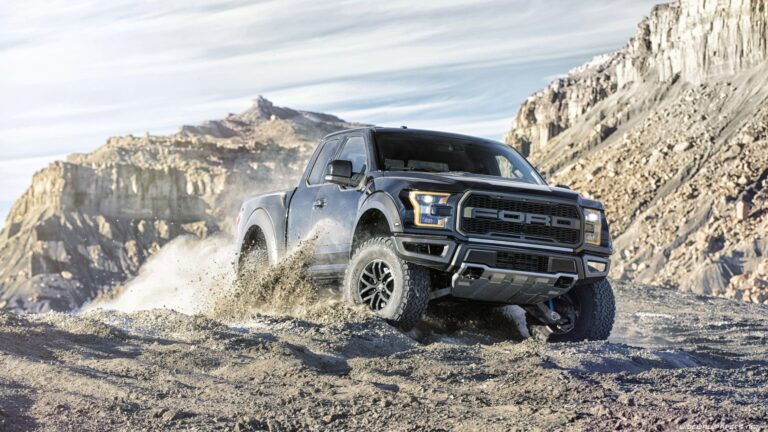
1. Ford F-150
The Ford F-150 consistently ranks as America’s best-selling truck, and for good reason. Its extensive range of engine options and configurations makes it incredibly versatile for towing.
- Engine Options: The 3.5L EcoBoost V6 is a standout, offering impressive torque and often the highest towing capacity in its class (up to 14,000 lbs in some configurations). The 5.0L V8 provides classic V8 power, while the 3.0L Power Stroke diesel offers excellent fuel economy and low-end torque.
- Towing Features: Ford’s Pro Trailer Backup Assist, available Pro Power Onboard generator, and comprehensive camera systems make hitching and maneuvering a breeze. Its robust frame and sophisticated suspension contribute to a stable towing experience.
- Why it’s great: The F-150 offers a fantastic blend of power, technology, and everyday usability, making it a top contender for most mid-size travel trailers.
2. Ram 1500
The Ram 1500 stands out for its luxurious interior, smooth ride quality (especially with the optional air suspension), and impressive towing capabilities.
- Engine Options: The 5.7L HEMI V8 with eTorque mild-hybrid system provides ample power and efficiency. For those seeking diesel efficiency and torque, the 3.0L EcoDiesel V6 is a superb option, offering strong pulling power and excellent range.
- Towing Features: The available air suspension automatically levels the truck, enhancing stability and ride comfort when towing. Ram also offers advanced trailer reverse steering control and a robust trailer brake controller.
- Why it’s great: If you prioritize comfort and a refined driving experience alongside strong towing numbers, the Ram 1500 is an excellent choice.
3. Chevrolet Silverado 1500 / GMC Sierra 1500
These GM twins offer similar capabilities with distinct styling and trim levels. They are known for their strong V8 engines and innovative trailering technologies.
- Engine Options: The 6.2L V8 is a powerhouse, providing substantial towing capacity (up to 13,300 lbs for the Silverado). The 5.3L V8 is a reliable workhorse, and the 3.0L Duramax inline-six diesel offers best-in-class fuel economy and excellent torque for towing.
- Towing Features: GM’s MultiPro/Multi-Flex tailgate offers enhanced utility. Their advanced trailering system includes features like trailer length indicator, jackknife alert, and up to 15 camera views, making towing safer and easier.
- Why it’s great: The Silverado and Sierra combine traditional truck ruggedness with cutting-edge technology and a wide range of potent powertrains, making them highly capable for a variety of travel trailers.
4. Toyota Tundra
The Toyota Tundra has been completely redesigned, bringing it firmly into contention with its American rivals, especially concerning its new hybrid powertrain.
- Engine Options: The new i-FORCE MAX twin-turbo V6 hybrid powertrain offers impressive horsepower and torque, providing robust towing performance (up to 12,000 lbs). The non-hybrid i-FORCE V6 is also a strong performer.
- Towing Features: The Tundra includes an integrated trailer brake controller, trailer sway control, and a straight path assist feature to help with backing up. Its legendary reliability is a significant draw for many.
- Why it’s great: For those prioritizing Toyota’s reputation for reliability and a powerful, modern hybrid powertrain, the Tundra is a formidable choice for mid-size trailers.
Heavy-Duty Trucks: Unmatched Power for Large & Heavy Trailers
When your travel trailer is large, heavy, or a fifth-wheel, a heavy-duty truck becomes a necessity. These 3/4-ton (2500/250) and 1-ton (3500/350) trucks are built for serious work, offering significantly higher towing and payload capacities. For those with larger rigs, heavy-duty trucks are non-negotiable for safety and performance.
1. Ford F-250/F-350 Super Duty
Ford’s Super Duty lineup is engineered for extreme capability, often leading the class in towing and payload.
- Engine Options: The 7.3L "Godzilla" gas V8 is a powerful option, but the real star for heavy towing is the 6.7L Power Stroke V8 turbo diesel. It delivers monstrous torque and horsepower, enabling towing capacities well over 20,000 lbs for conventional towing and much higher for fifth-wheel/gooseneck.
- Towing Features: Super Duty trucks boast advanced camera systems, Pro Trailer Backup Assist, and robust heavy-duty frames and suspensions. They are designed from the ground up to handle immense loads with confidence.
- Why it’s great: If you have a massive travel trailer, toy hauler, or plan to upgrade to a larger RV, the Ford Super Duty offers unparalleled capability and a proven track record.
2. Ram 2500/3500 HD
Ram’s heavy-duty trucks combine immense power with a surprisingly comfortable and refined interior, setting them apart in the segment.
- Engine Options: The 6.4L HEMI V8 gas engine is a strong performer, but the legendary 6.7L Cummins Turbo Diesel inline-six engine is the powerhouse. Available in different outputs, it offers class-leading torque and towing capacities exceeding 30,000 lbs in some 3500 configurations.
- Towing Features: The Ram HD offers an optional rear auto-leveling air suspension, a cargo-view camera, and an advanced trailer tire pressure monitoring system. Its solid axle front suspension and robust components provide excellent stability.
- Why it’s great: For those needing extreme towing capability without sacrificing interior comfort and ride quality, the Ram HD lineup, especially with the Cummins diesel, is an outstanding choice.
3. Chevrolet Silverado 2500/3500 HD / GMC Sierra 2500/3500 HD
GM’s heavy-duty twins are known for their muscular styling, powerful diesel engine, and extensive trailering technology.
- Engine Options: The 6.6L V8 gas engine provides substantial power, but the 6.6L Duramax V8 Turbo-Diesel, paired with an Allison 10-speed transmission, is the go-to for heavy hauling. It delivers immense torque and impressive towing numbers, often rivaling or exceeding competitors.
- Towing Features: GM’s HD trucks offer the industry’s most camera views (up to 15), including a "transparent trailer" view that helps you see what’s behind your trailer. Other features include trailer length indicator and jackknife alert.
- Why it’s great: These trucks are built for serious work and provide an excellent combination of brute strength, advanced towing tech, and comfortable interiors, making them perfect for the heaviest travel trailers.
Essential Features and Technologies for Optimal Towing
Beyond the core truck, certain features and technologies significantly enhance the towing experience, making it safer and more enjoyable. From years of towing, I can tell you these are worth every penny.
Integrated Trailer Brake Controller (ITBC)
An ITBC is a non-negotiable feature. It allows the truck’s brakes and the trailer’s brakes to work in sync, providing smooth, controlled stopping power. Aftermarket controllers exist, but an integrated factory unit offers seamless operation and better reliability.
Tow/Haul Mode
This mode optimizes the transmission’s shift points, holding gears longer to prevent "hunting" and providing engine braking on descents. It significantly reduces wear on the transmission and improves control.
Trailer Sway Control
This safety feature uses the truck’s stability control system to detect and counteract trailer sway. It can apply individual brakes or reduce engine power to help bring the trailer back in line.
Backup Assist Features (e.g., Ford’s Pro Trailer Backup Assist)
These innovative systems simplify the often-challenging task of backing up a trailer. By simply turning a knob in the direction you want the trailer to go, the truck automatically steers, making even tight maneuvers much easier.
Camera Systems
Modern trucks offer an array of cameras, from surround-view to hitch-view and even specific trailer cameras. These provide invaluable assistance for hitching up, navigating tight spaces, and monitoring your trailer while driving.
Extended-Range Fuel Tank
Towing significantly reduces fuel economy. An extended-range fuel tank can provide hundreds of additional miles between fill-ups, reducing stress and allowing for more flexibility in your travel plans.
Heavy-Duty Cooling System
Towing puts immense strain on a truck’s engine and transmission. A heavy-duty cooling system is designed to keep temperatures in check, preventing overheating and ensuring long-term reliability.
Pro Tips for Safe and Enjoyable Towing
Even with the best truck, proper technique and preparation are crucial. Here are some actionable pro tips to enhance your towing adventures.
Pre-Trip Checks Are Paramount
Before every trip, perform a thorough inspection. Check tire pressure on both the truck and trailer, ensuring they are inflated to the manufacturer’s recommendations for towing. Verify all lights are working (running, brake, turn signals).
Ensure your hitch connection is secure, safety chains are crossed and attached, and the breakaway cable is hooked up. Don’t forget to check fluid levels in your truck and the condition of your trailer’s wheel bearings. For more detailed insights on pre-trip safety, check out our guide on .
Use a Weight Distribution Hitch (When Needed)
For most travel trailers over 5,000 lbs, a weight distribution hitch is highly recommended, if not essential. It distributes the tongue weight more evenly across all axles of the truck and trailer, improving stability, reducing sag, and enhancing braking.
Proper setup of a WDH is critical. It should be adjusted to return the front of your truck to approximately its unhitched height.
Proper Trailer Loading
How you load your trailer profoundly impacts stability. Place about 60% of your cargo weight in the front half of the trailer, over or slightly ahead of the axles. Distribute heavy items low and centered.
Avoid putting too much weight in the very front or very rear of the trailer, as this can create unstable tongue weights or induce sway.
Adjust Your Driving Habits
Towing requires a different approach to driving. Slow down, increase your following distance, and anticipate stops much earlier. Give yourself ample room for turns, remembering the trailer’s extra length.
Be mindful of crosswinds, which can significantly affect trailer stability. Use your mirrors frequently and be aware of your entire rig’s dimensions.
Regular Maintenance is Key
Both your truck and your travel trailer require diligent maintenance. Follow manufacturer-recommended service intervals, paying close attention to brakes, tires, suspension, and drivetrain components. Regular maintenance not only ensures safety but also prolongs the life of your vehicles.
Common Mistakes to Avoid When Choosing a Towing Truck
Even experienced towers can sometimes make oversights. Here are some common pitfalls to steer clear of:
- Overestimating Your Truck’s Capacity: Never assume your truck can tow "X" amount just because a similar model can. Always refer to your specific truck’s door jamb sticker and owner’s manual for its actual ratings.
- Ignoring Payload Capacity: This is the most frequently overlooked metric. Remember, everything in your truck (people, gear, fuel, and trailer tongue weight) counts towards payload. Many exceed payload long before they exceed towing capacity.
- Not Using a Weight Distribution Hitch: For trailers that warrant it, skipping a WDH compromises safety and handling, leading to a less enjoyable and potentially dangerous towing experience.
- Improper Tire Inflation: Underinflated tires on either the truck or the trailer can lead to instability, excessive heat buildup, tire failure, and reduced fuel economy. Always inflate to the towing-specific pressures.
- Neglecting Maintenance: Putting off routine service for your truck or trailer can lead to costly repairs and dangerous breakdowns on the road.
For official towing safety guidelines and regulations, always refer to reputable sources like the NHTSA’s towing guide to ensure you’re up-to-date with best practices.
Conclusion: Your Perfect Towing Companion Awaits
Choosing the best towing trucks for travel trailers is a significant investment, but it’s an investment in safety, peace of mind, and countless unforgettable adventures. By understanding the critical metrics of towing capacity, payload, and the specific needs of your travel trailer, you can make an informed decision that will serve you well for years to come.
Whether you opt for a versatile half-ton or a mighty heavy-duty rig, prioritize matching your truck’s capabilities to your trailer’s requirements. Don’t just meet the minimums; aim for a comfortable margin. With the right truck, every mile on the open road will be a joy, bringing you closer to the destinations and experiences you’ve dreamed of.
So, take your time, do your research, and prepare to embark on your next great adventure with confidence. If you’re still weighing your options for trailers, explore our article on to complete your perfect RV setup. Share your towing experiences and favorite truck models in the comments below – we’d love to hear from you!