The Ultimate Guide to Choosing the Best Truck to Pull Your Travel Trailer
The Ultimate Guide to Choosing the Best Truck to Pull Your Travel Trailer Lmctruck.Guidemechanic.com
Embarking on the open road with your travel trailer promises adventure, freedom, and unforgettable memories. But before you hitch up and head out, there’s a critical decision to make: choosing the right tow vehicle. The best truck to pull a travel trailer isn’t just about raw power; it’s a careful balance of capacity, safety, comfort, and the specific needs of your RV lifestyle.
As an expert in the RV and towing world, I’ve seen firsthand the difference a properly matched truck makes. From navigating steep mountain passes to cruising effortlessly on the highway, having the right vehicle transforms your journey. This comprehensive guide will equip you with the knowledge to make an informed decision, ensuring your travels are safe, enjoyable, and stress-free.
The Ultimate Guide to Choosing the Best Truck to Pull Your Travel Trailer
Why Choosing the Right Tow Truck is Non-Negotiable
Ignoring your truck’s towing capabilities is a common and dangerous mistake. An undersized truck struggles under the weight, leading to poor performance, excessive wear and tear, and significantly compromised safety. Imagine white-knuckling it down a hill because your brakes aren’t up to the task, or constantly battling trailer sway in crosswinds.
Based on my experience, an improperly matched tow vehicle isn’t just inefficient; it’s a serious safety hazard. It can lead to accidents, costly repairs, and ultimately, a ruined trip. Your truck and trailer combination needs to work in harmony, providing stability, control, and peace of mind.
Decoding the Towing Jargon: Essential Metrics You Must Know
Before we dive into specific truck models, it’s vital to understand the key terminology and ratings that dictate a truck’s towing capabilities. These numbers are your safety net and your guide.
1. Towing Capacity
This is arguably the most recognized number, representing the maximum weight your truck can pull. It’s determined by the manufacturer, taking into account the engine, transmission, axle ratio, and frame strength. Always consult your truck’s owner’s manual or the sticker on the door jamb for the exact rating for your specific vehicle configuration.
Pro Tip: Never rely on generic online specs. Even two identical-looking trucks can have different towing capacities due to varying options like engine type, axle ratio, or tow packages.
2. Payload Capacity
Often overlooked, payload capacity is just as crucial as towing capacity. It refers to the maximum weight your truck can carry in its cab and bed. This includes passengers, cargo, and, most importantly for towing, the tongue weight of your travel trailer.
Payload is often the limiting factor for many RVers, especially with half-ton trucks. You must subtract the weight of everyone and everything inside your truck from this number to find your available payload for the trailer’s tongue weight.
3. Gross Vehicle Weight Rating (GVWR)
GVWR is the maximum permissible total weight of your fully loaded truck. This includes the truck’s curb weight, all passengers, cargo, and the trailer’s tongue weight. Exceeding your truck’s GVWR puts immense strain on its suspension, brakes, and chassis.
Similarly, your travel trailer also has a GVWR, representing the maximum loaded weight of the trailer itself. This is a critical number to know for your trailer.
4. Gross Combined Weight Rating (GCWR)
This is the absolute maximum allowable weight of the fully loaded truck and the fully loaded trailer combined. It’s the total weight of everything moving down the road. Staying within your GCWR ensures your powertrain and braking system can safely handle the combined mass.
Think of it as the ultimate limit for your entire setup. Overloading your GCWR dramatically increases stopping distances and reduces control.
5. Tongue Weight (for Bumper Pull Trailers) / Pin Weight (for Fifth-Wheel Trailers)
Tongue weight is the downward force the trailer’s coupler exerts on the hitch receiver of your tow vehicle. For conventional travel trailers, it should ideally be 10-15% of the trailer’s total loaded weight. Too little tongue weight can cause severe trailer sway, while too much can overload your truck’s payload and rear axle.
For fifth-wheel trailers, this is called "pin weight" and typically ranges from 15-25% of the trailer’s loaded weight, sitting directly over the truck’s rear axle in the bed. This higher percentage explains why fifth-wheel trailers usually require heavier-duty trucks.
Understanding Your Travel Trailer’s Weight
Before you even look at trucks, you need to know your travel trailer’s actual weight. Don’t just use the "dry weight" listed by the manufacturer. That’s the trailer empty, without water, propane, gear, or personal items.
Always use your trailer’s GVWR (Gross Vehicle Weight Rating) as your primary planning weight. This is the maximum loaded weight your trailer can safely be. If you already own a trailer, take it to a CAT scale when fully loaded for an accurate real-world weight.
Hitching Up: Types of Hitches and Their Implications
The type of hitch your travel trailer uses significantly impacts the kind of truck you’ll need.
1. Receiver Hitch (Bumper Pull)
This is the most common type for travel trailers. A square receiver tube is mounted to the truck’s frame, into which a ball mount with a hitch ball is inserted. These are rated by class (Class I to V), with Class III, IV, and V being common for travel trailers.
Most travel trailers up to about 10,000-12,000 pounds use a receiver hitch. For trailers over 5,000 pounds, a weight distribution hitch (WDH) is strongly recommended, if not required. This accessory distributes the tongue weight more evenly across both the truck’s and trailer’s axles, improving stability and handling. (You can learn more about choosing the right WDH in our guide to weight distribution hitches).
2. Fifth-Wheel Hitch
Fifth-wheel hitches are mounted in the bed of a pickup truck, typically over or slightly forward of the rear axle. They connect to a kingpin on the trailer. This setup offers superior stability and maneuverability compared to bumper pull, as the weight is placed directly in the truck’s bed.
Fifth-wheel trailers are generally larger and heavier than conventional travel trailers, requiring heavier-duty trucks (typically 3/4-ton or 1-ton).
3. Gooseneck Hitch
Similar to a fifth-wheel, a gooseneck hitch also mounts in the truck’s bed, but it uses a ball and coupler system. While common for utility and horse trailers, it’s less frequently used for RV travel trailers, though some RVs are designed for it. Like fifth-wheels, they require heavy-duty trucks.
Light-Duty vs. Heavy-Duty Trucks: Which One Do You Need?
The fundamental choice boils down to the weight of your travel trailer. Trucks are categorized by their "ton" ratings, which roughly indicate their payload and towing capabilities.
1. Half-Ton Trucks (150/1500 Series)
These are the most popular trucks on the road, known for their versatility as daily drivers and capable tow vehicles.
- Popular Models: Ford F-150, Ram 1500, Chevrolet Silverado 1500, GMC Sierra 1500, Toyota Tundra.
- Towing Range: Typically 6,000 to 13,000 pounds, depending heavily on configuration (engine, axle ratio, tow package).
- Payload Range: Generally 1,500 to 2,500 pounds.
- Pros: Comfortable ride, better fuel economy when unladen, easier to maneuver in urban settings, more luxurious interior options.
- Cons: Payload capacity can be quickly eaten up, especially with larger families or lots of gear. May feel less stable with heavier trailers, especially in windy conditions.
- Ideal For: Smaller to medium-sized travel trailers (typically under 8,000 pounds loaded). If your loaded trailer is between 8,000-10,000 pounds, you’ll need a very specific, highly-optioned half-ton, and you’ll be pushing its limits. Anything above that is generally too much for a half-ton.
Based on my experience, many first-time RVers underestimate how quickly a half-ton’s payload capacity disappears. Always verify your payload sticker!
2. Three-Quarter-Ton Trucks (250/2500 Series)
Stepping up to a 3/4-ton truck brings significantly increased towing and payload capacities. These are purpose-built for heavier work.
- Popular Models: Ford F-250, Ram 2500, Chevrolet Silverado 2500HD, GMC Sierra 2500HD.
- Towing Range: Typically 12,000 to 20,000 pounds.
- Payload Range: Generally 2,500 to 4,000 pounds.
- Pros: Much higher payload and towing capacities, increased stability, stronger brakes, heavier-duty components, often available with powerful diesel engine options.
- Cons: Stiffer ride when unladen, higher purchase price, lower fuel economy, can be more challenging to park and maneuver in tight spaces.
- Ideal For: Medium to large travel trailers (8,000 to 15,000 pounds loaded), and many smaller to mid-sized fifth-wheel trailers. This is often the sweet spot for many serious RVers.
3. One-Ton Trucks (350/3500 Series)
The titans of towing, one-ton trucks are designed for the heaviest loads, including large fifth-wheel and gooseneck trailers.
- Popular Models: Ford F-350, Ram 3500, Chevrolet Silverado 3500HD, GMC Sierra 3500HD.
- Towing Range: Typically 15,000 to 35,000+ pounds.
- Payload Range: Generally 4,000 to 7,500+ pounds (especially with dual rear wheels).
- Pros: Maximize towing and payload capacities, extreme stability with heavy loads, often offer dual rear wheel (DRW) options for even greater stability and capacity.
- Cons: Stiffest ride when unladen, highest purchase price, worst fuel economy, largest footprint making them difficult for daily driving.
- Ideal For: Very large travel trailers (over 15,000 pounds), most fifth-wheel trailers, and toy haulers. If you’re considering a large fifth-wheel, a one-ton is almost always the appropriate choice.
Gas vs. Diesel Engines for Towing
Another crucial decision point is the engine type. Both gas and diesel engines have distinct advantages and disadvantages for towing.
Gas Engines
- Pros: Lower upfront cost, less expensive maintenance, readily available fuel, quicker warm-up times, generally quieter. Modern gas engines, especially V8s and turbo V6s, offer impressive horsepower and torque for towing.
- Cons: Less low-end torque compared to diesel, which means they might work harder on grades, lower fuel economy when towing heavy loads, shorter engine lifespan under constant heavy towing.
- Best For: Occasional towing, lighter travel trailers, situations where the upfront cost and daily driving characteristics are prioritized.
Diesel Engines
- Pros: Superior low-end torque for effortless pulling, excellent fuel economy when towing, incredible durability and longevity (often lasting 300,000+ miles), better engine braking on descents, holds resale value well.
- Cons: Higher upfront cost, more expensive maintenance (especially emissions systems), higher fuel cost (though better MPG often offsets this), slower warm-up times, can be louder.
- Best For: Frequent towing, heavy travel trailers, large fifth-wheels, long-distance travel, or those who prioritize maximum power and efficiency while towing.
Pro tips from us: If your travel trailer is over 10,000 pounds, a diesel engine in a 3/4-ton or 1-ton truck is almost always the better choice for comfort, longevity, and safety.
Essential Towing Features and Accessories
Beyond the basic capacities, certain features and accessories significantly enhance the towing experience.
- Integrated Trailer Brake Controller: This is a non-negotiable safety feature that allows you to control the electric brakes on your trailer from the truck’s cab. Most modern trucks offer this as an integrated factory option, which is superior to aftermarket units.
- Tow/Haul Mode: This transmission mode adjusts shift points, holds gears longer, and enhances engine braking, making towing much smoother and reducing transmission wear.
- Trailer Sway Control: Many trucks now include electronic trailer sway control as part of their stability control system, which can apply individual wheel brakes to mitigate sway.
- Extended Tow Mirrors: Essential for seeing around your wider trailer. Many trucks offer power-folding, extendable mirrors.
- Backup Camera with Trailer Assist: Modern cameras with grid lines and even zoom functions make hitching up a breeze. Some even have a camera view in the bed for fifth-wheel hitching.
- Upgraded Tires: Ensure your truck’s tires are properly rated for the weight you’ll be carrying and towing. Light Truck (LT) tires are often preferred over Passenger (P) tires for heavy towing.
- Air Bags/Suspension Enhancements: Aftermarket air springs can help level your truck and improve ride quality when heavily loaded, though they don’t increase your truck’s official payload capacity.
Top Contenders: Best Trucks for Towing Travel Trailers
While there’s no single "best" truck for everyone, these models consistently rise to the top for their towing capabilities and reliability. Remember, the specific configuration (engine, axle, trim) of any of these trucks is paramount.
Ford F-Series (F-150, F-250, F-350)
Ford’s F-Series has been America’s best-selling truck for decades, and for good reason.
- F-150: Offers an impressive range of engines, including the powerful 3.5L EcoBoost V6 and the new PowerBoost hybrid, capable of towing significant weight for a half-ton. Look for the Max Trailer Tow Package.
- F-250/F-350 (Super Duty): These heavy-duty trucks are towing beasts. Available with potent gasoline V8s and the legendary Power Stroke diesel engine, they excel at pulling large travel trailers and fifth-wheels with confidence. The F-350 offers even higher payload and towing, especially in dual-rear-wheel configurations.
Ram Trucks (1500, 2500, 3500)
Ram is known for its luxurious interiors and formidable capabilities.
- Ram 1500: Offers a smooth ride thanks to its coil-spring rear suspension (or optional air suspension). The 5.7L HEMI V8 with eTorque provides solid towing numbers, and there’s a V6 EcoDiesel option for better fuel economy.
- Ram 2500/3500 HD: These heavy-duty Rams are powerhouses. The available 6.7L Cummins Turbo Diesel is renowned for its torque and durability, making them excellent choices for large travel trailers and fifth-wheels. The Ram 3500, especially with the High Output Cummins, boasts segment-leading towing figures.
Chevrolet Silverado / GMC Sierra (1500, 2500HD, 3500HD)
GM’s trucks offer a strong combination of capability and refinement.
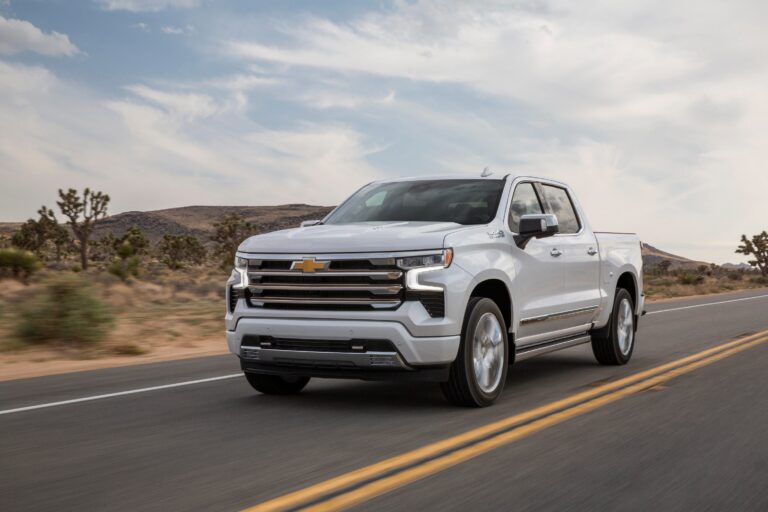
- Silverado/Sierra 1500: Available with various V8 engines (5.3L and 6.2L) and a capable 3.0L Duramax diesel. The Max Trailering Package on the 1500 significantly boosts its towing chops.
- Silverado/Sierra 2500HD/3500HD: These heavy-duty twins are built for serious work. They offer strong gasoline V8 options and the highly respected 6.6L Duramax diesel, known for its smooth power delivery and reliability. Like the others, the 3500HD maximizes capacities.
Toyota Tundra (for lighter loads)
While not matching the domestic brands in sheer heavy-duty capacity, the Tundra is a highly reliable option for lighter travel trailers.
- Tundra: The new i-FORCE MAX hybrid powertrain offers good power and torque. It’s an excellent choice if your travel trailer is on the lighter side (generally under 8,000-9,000 pounds) and reliability is your absolute top priority. Its payload capacity is often a limiting factor for heavier trailers.
How to Calculate Your Real-World Towing Needs
This is where the rubber meets the road. Follow these steps to ensure you pick the right truck.
- Find Your Trailer’s GVWR: This is the most important number. It’s usually on a sticker on the side of your trailer. This is the maximum your trailer can weigh, so always use this for planning.
- Estimate Your Loaded Tongue/Pin Weight:
- For travel trailers (bumper pull): Take 12-15% of your trailer’s GVWR.
- For fifth-wheel trailers: Take 18-22% of your trailer’s GVWR.
- Determine Your Truck’s Available Payload: Locate the yellow "Tire and Loading Information" sticker on your truck’s driver’s side door jamb. It will state "The combined weight of occupants and cargo should never exceed XXXX lbs." This is your actual payload capacity.
- Subtract Everything from Payload: From that payload number, subtract:
- The weight of all passengers (including yourself).
- The weight of all cargo in the truck bed (tools, generator, firewood, cooler, etc.).
- Crucially, subtract your estimated tongue/pin weight.
- If you have a fifth-wheel hitch, subtract its weight (typically 150-250 lbs).
- The remaining number should be positive. If it’s negative, your truck is overloaded.
- Compare Trailer GVWR to Truck’s Max Towing Capacity: Your trailer’s GVWR must be less than your truck’s maximum towing capacity. Ideally, leave a buffer of 15-20% for safety and comfort.
Common mistakes to avoid are solely focusing on towing capacity and neglecting payload. Many people find their truck’s payload capacity is the first limit they hit, not the advertised towing capacity.
Pro Tips for a Smooth Towing Experience
Even with the perfect truck, proper technique and preparation are key.
- Practice Makes Perfect: If you’re new to towing, find an empty parking lot and practice turning, backing up, and maneuvering. It builds confidence.
- Pre-Trip Inspections: Before every trip, check tire pressure on both truck and trailer, test all lights (running, brake, turn signals), ensure the hitch connection is secure, safety chains are crossed, and the break-away cable is attached.
- Proper Trailer Loading: Distribute weight evenly in your trailer, with heavier items low and towards the front to maintain proper tongue weight and prevent sway.
- Drive Defensively: Increase your following distance, anticipate stops, and take turns wider. Remember you’re much longer and heavier.
- Monitor Your Truck: Pay attention to your truck’s gauges – especially transmission temperature.
- Tire Pressure is Key: Always inflate your truck and trailer tires to the manufacturer’s recommended pressures for towing, which are often higher than daily driving pressures.
For more detailed safety advice, consider checking out resources from the National Highway Traffic Safety Administration (NHTSA).
Conclusion: Your Journey Starts with the Right Foundation
Choosing the best truck to pull a travel trailer is one of the most important decisions you’ll make as an RVer. It directly impacts your safety, the longevity of your vehicles, and ultimately, the enjoyment of your travels. By thoroughly understanding towing metrics, honestly assessing your travel trailer’s loaded weight, and considering the features that matter most to you, you can confidently select a truck that will serve as a reliable partner on countless adventures.
Don’t rush the decision. Do your homework, crunch the numbers, and prioritize safety above all else. With the right truck, every mile on the open road will be a pleasure. Happy trails!