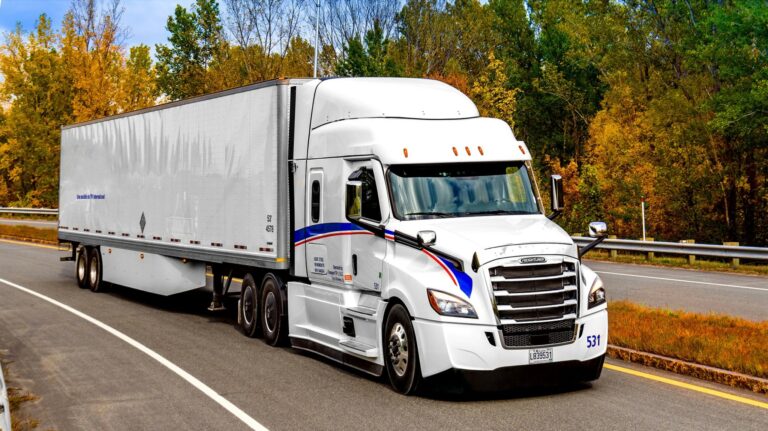
Mastering DOT Logbook Rules: Your Ultimate Guide to HOS Compliance and ELDs
Mastering DOT Logbook Rules: Your Ultimate Guide to HOS Compliance and ELDs Lmctruck.Guidemechanic.com
Welcome, professional drivers, fleet managers, and industry enthusiasts! Navigating the complex world of commercial transportation demands more than just skill behind the wheel. It requires a deep understanding of the regulations that keep our roads safe and our industry accountable. At the heart of these regulations are the DOT Logbook Rules, which govern the critical aspect of driver Hours of Service (HOS).
As an expert blogger and professional content writer, I’ve seen firsthand the impact that proper logbook compliance has on a trucking operation. It’s not just about avoiding fines; it’s about driver safety, operational efficiency, and maintaining a stellar compliance record. This comprehensive guide is designed to be your go-to resource, breaking down every essential detail of DOT Logbook Rules, from the fundamental HOS regulations to the intricacies of Electronic Logging Devices (ELDs).
Mastering DOT Logbook Rules: Your Ultimate Guide to HOS Compliance and ELDs
Our mission here is to provide you with an in-depth, actionable understanding that will not only help you stay compliant but also thrive in your profession. We’ll dive deep into the "why" and "how" of these rules, ensuring you have all the knowledge to navigate them successfully.
Why DOT Logbook Rules Are Non-Negotiable
The Federal Motor Carrier Safety Administration (FMCSA) establishes DOT Logbook Rules primarily to prevent driver fatigue, which is a major contributing factor in commercial motor vehicle (CMV) accidents. These rules are designed to ensure drivers get adequate rest, promoting safety for everyone on the road.
Beyond safety, compliance with DOT Logbook Rules is crucial for the financial health and operational integrity of any trucking business. Non-compliance can lead to hefty fines, out-of-service orders, and a damaged Compliance, Safety, Accountability (CSA) score, which can impact insurance rates and business opportunities.
Based on my experience, many drivers and carriers underestimate the ripple effect of a single logbook violation. It’s not just a ticket; it’s a mark on a record that can follow you for years, affecting your career or business. Proactive understanding and adherence are your best defense.
Who Needs to Follow DOT Logbook Rules?
The DOT Logbook Rules apply to most commercial motor vehicle (CMV) drivers operating in interstate commerce, and in many cases, intrastate commerce as well. Generally, if you operate a vehicle that:
- Has a gross vehicle weight rating (GVWR) or gross combination weight rating (GCWR) of 10,001 pounds or more.
- Is designed or used to transport 9 to 15 passengers (including the driver) for compensation.
- Is designed or used to transport 16 or more passengers (including the driver) not for compensation.
- Is used to transport hazardous materials in a quantity requiring placards.
If your driving falls under any of these categories, then understanding and diligently following DOT Logbook Rules is essential for you. There are some specific exemptions, such as for certain short-haul operations, but the general applicability is broad.
The Evolution of Driver Logs: From Paper to ELDs
For decades, commercial drivers meticulously recorded their hours on paper logbooks. These paper logs, while functional, were prone to errors, manipulation, and time-consuming manual calculations. The shift towards Electronic Logging Devices (ELDs) marked a significant technological leap in enforcing DOT Logbook Rules.
The ELD mandate, fully implemented in 2017 (with some specific phase-ins), revolutionized how HOS are recorded. This move aimed to improve accuracy, reduce administrative burden, and enhance safety by ensuring more consistent compliance. It was a big change for many, but ultimately, it brought greater transparency and efficiency to the industry.
Understanding the Core DOT Logbook Rules: Hours of Service Explained
The bedrock of DOT Logbook Rules is the Hours of Service (HOS) regulations. These rules dictate how long a commercial driver can drive, work, and when they must take breaks. Misinterpreting these rules is a common mistake that can lead to violations.
Let’s break down the most critical HOS components:
1. The 11-Hour Driving Limit
This rule is straightforward: a driver cannot drive more than 11 hours following 10 consecutive hours off duty. This limit is designed to prevent fatigue from prolonged periods of driving. It’s crucial to remember that this is a driving limit, not a working limit.
Based on my experience, many drivers get this confused with the 14-hour duty limit. You could be on duty for 14 hours, but only 11 of those hours can be spent actively driving. Exceeding this limit, even by a few minutes, constitutes a violation.
2. The 14-Hour Duty Limit (Driving Window)
A driver cannot drive after being on duty for 14 hours. This 14-hour period begins immediately after 10 consecutive hours off duty. Once this 14-hour window starts, it cannot be extended, even if you take non-driving breaks within it.
This rule is often called the "driving window" because it sets the total timeframe within which a driver can complete their 11 hours of driving. For example, if you start your day at 6 AM, your 14-hour clock expires at 8 PM, regardless of how much actual driving you’ve done. Pro tips from us: plan your day meticulously to make the most of this window.
3. The Mandatory 30-Minute Break Rule
This rule requires a driver to take a 30-minute off-duty or sleeper berth break after 8 cumulative hours of driving. The break must be taken before the driver drives again. This is a critical rule that was introduced to ensure drivers have a sufficient rest period during longer shifts.
Common mistakes to avoid are taking a break too early in your shift or trying to combine this break with other activities that aren’t truly off-duty. The clock for the 8 cumulative hours of driving resets after this 30-minute break.
4. The 10-Hour Off-Duty Requirement
To reset their daily HOS clock, a driver must have at least 10 consecutive hours off duty. This period allows for adequate rest and recovery before starting a new driving shift. This is the foundation upon which all other daily HOS rules are built.
Without this full 10 hours, a driver cannot legally begin a new 14-hour duty window or drive for 11 hours. Planning for proper rest is not just about compliance; it’s about your well-being and safety.
5. The 60/70-Hour Rule (7/8-Day Cycle)
This rule limits the total on-duty time a driver can accumulate over a specific period. A driver cannot drive after accumulating:
- 60 hours on duty in 7 consecutive days.
- 70 hours on duty in 8 consecutive days.
The choice between the 7-day and 8-day cycle depends on the carrier’s operating schedule. To reset this accumulated on-duty time, a driver must take a "34-hour restart," which involves at least 34 consecutive hours off duty. This allows drivers to effectively "reset" their weekly cumulative hours.
6. Sleeper Berth Provision
For drivers utilizing a sleeper berth, the rules offer flexibility to split the required 10-hour off-duty period. The split must be into two periods:
- One period of at least 7 consecutive hours in the sleeper berth.
- Another period of at least 2 consecutive hours, either in the sleeper berth or off duty.
Neither period counts against the 14-hour driving window, and the total of the two periods must add up to at least 10 hours. This provision is complex but incredibly useful for team drivers or those with specific route schedules. Based on my experience, proper use of the sleeper berth rule requires careful planning and accurate logging.
7. Adverse Driving Conditions Exemption
This exemption allows a driver to extend the 11-hour driving limit and 14-hour driving window by up to 2 hours if unforeseen adverse driving conditions are encountered. These conditions include things like unexpected snow, ice, or dense fog that were not known prior to the start of the duty day.
It’s important to note that this exemption does not apply to conditions that were known or could have been reasonably anticipated. Pro tips from us: don’t abuse this exemption; it’s for truly unexpected events, not poor trip planning.
8. Short-Haul Exemption
Drivers who operate within a 150 air-mile radius of their normal work reporting location and return to that location within 14 hours are often exempt from the 30-minute break rule and the ELD mandate, provided they keep accurate time records.
This exemption is primarily for local delivery drivers or those with predictable, shorter routes. Even with this exemption, drivers must still adhere to the 11-hour driving limit and the 10-hour off-duty requirement. It’s crucial to understand the specific criteria for this exemption, as it’s often a point of confusion.
The Mandate of Electronic Logging Devices (ELDs)
The ELD mandate dramatically changed how DOT Logbook Rules are enforced and recorded. An ELD is technology that automatically records a driver’s driving time, ensuring compliance with HOS rules.
What ELDs Do
ELDs connect to a vehicle’s engine and automatically record:
- Driving time.
- Engine hours.
- Vehicle movement.
- Miles driven.
- Location information.
This automatic recording significantly reduces the potential for errors and false logs that were more common with paper logbooks. It provides a transparent and verifiable record of a driver’s activities.
Benefits of ELDs
Beyond compliance, ELDs offer several operational benefits:
- Improved Accuracy: Automated recording eliminates manual errors.
- Reduced Paperwork: No more fumbling with paper logs.
- Enhanced Safety: Better HOS compliance leads to less fatigued driving.
- Streamlined Inspections: Law enforcement can quickly review HOS data.
- Fleet Management Insights: Carriers gain valuable data on driver performance and efficiency.
Pro tips from us: Choosing the right ELD system is paramount. Look for one that is user-friendly, reliable, and offers good customer support.
Common ELD Issues and Solutions
While ELDs are beneficial, drivers can encounter issues. Common problems include:
- Connectivity Issues: Loss of cellular signal can temporarily affect data transmission.
- Malfunctions: Like any technology, ELDs can experience glitches.
- Driver Unassigned Driving: When a vehicle moves without an assigned driver, the ELD records "unassigned driving," which must be reconciled.
Solutions often involve ensuring proper installation, regular software updates, and immediate reporting of malfunctions to your carrier. Always understand how to manually input data in case of an ELD failure, as per FMCSA guidelines.
Maintaining Accurate Logbooks: Beyond the Basics
Accuracy in your logbook, whether paper or electronic, is critical. It’s your official record of compliance with DOT Logbook Rules.
Required Information in Your Logbook
Every logbook entry must contain specific information:
- Date: The calendar date of the record.
- Total Miles Driven: The distance covered during the 24-hour period.
- Vehicle Identification Number (VIN) or Unit Number: Identifies the CMV.
- Carrier Name and Main Office Address: Identifies the operating company.
- Driver’s Name and Co-driver’s Name (if applicable): Who is operating the vehicle.
- Duty Status Changes: Times and locations for changes between off-duty, sleeper berth, driving, and on-duty (not driving).
- Shipping Document Number or Load Information: Details about the freight being hauled.
For ELDs, much of this information is automatically captured, but drivers still need to verify and confirm details, especially duty status changes.
Common Mistakes to Avoid in Logbook Compliance
Based on my experience reviewing countless driver logs, here are some common pitfalls:
- Falsifying Logs: Intentionally recording incorrect information is a severe violation.
- Incorrect Duty Status: Misclassifying off-duty time as on-duty or vice-versa. Remember, "on-duty not driving" includes loading, unloading, pre-trip inspections, and waiting time.
- Failing to Take Required Breaks: Skipping the 30-minute break or not getting 10 consecutive hours off duty.
- Not Updating ELD Status: Forgetting to change status from "driving" to "on-duty" or "off-duty" when the vehicle stops.
- Improper Use of Exemptions: Applying exemptions (like the short-haul or adverse driving) when the conditions aren’t met.
- Lack of Supporting Documents: Not having bills of lading, fuel receipts, or other documents that support your log entries.
Pro tips from us: Always be honest and diligent. Your logbook is a legal document. Double-check your entries daily before certifying them.
Audits and Inspections: What to Expect
DOT officers conduct roadside inspections and full-scale compliance reviews at carrier facilities. During these, DOT Logbook Rules are heavily scrutinized.
- Roadside Inspections: Officers will check your current HOS status, review your ELD or paper logs for the past 7 days, and look for obvious violations. Be prepared to present your ELD data or paper logbook promptly.
- Compliance Reviews: These are in-depth audits of a carrier’s operations, including a detailed review of driver HOS records over an extended period. They’ll compare logs with supporting documents like fuel receipts, toll records, and dispatch records to ensure accuracy.
Common mistakes to avoid are not having your ELD data readily accessible or having incomplete/inaccurate supporting documents. Transparency and organization are your best friends here.
Consequences of Non-Compliance with DOT Logbook Rules
The repercussions of failing to adhere to DOT Logbook Rules can be severe, impacting both drivers and carriers.
Fines and Penalties
Violations can result in substantial fines for both the driver and the motor carrier. These fines can range from hundreds to thousands of dollars per violation, depending on the severity and frequency. Repeated violations lead to higher penalties.
Out-of-Service Orders
Drivers found in serious HOS violations can be placed out of service, meaning they cannot operate a CMV until the violation is corrected and they have met the required off-duty time. This directly impacts delivery schedules and driver income.
Impact on CSA Scores
Every HOS violation negatively affects a carrier’s CSA score. A poor CSA score can lead to:
- More frequent roadside inspections.
- Higher insurance premiums.
- Loss of business from shippers who check CSA scores.
- Intervention from the FMCSA, including compliance reviews and potentially operating authority revocation.
Safety Implications
Most importantly, non-compliance compromises safety. Fatigued driving is dangerous and significantly increases the risk of accidents, potentially leading to injuries or fatalities. The rules are there to protect everyone.
Pro Tips for Navigating DOT Logbook Rules Like a Pro
Staying compliant isn’t just about following rules; it’s about adopting best practices that make compliance second nature.
- Understand the Rules Inside Out: Don’t just memorize; comprehend the why behind each rule. This allows for better decision-making on the road. The FMCSA website is an excellent resource for detailed regulations.
- Plan Your Routes and Schedules: Use your ELD’s planning features or a good trip planner to anticipate HOS limits. Factor in potential delays from traffic, weather, or loading/unloading times.
- Communicate with Dispatch: Keep your dispatch informed about your HOS status, especially if you anticipate hitting limits or needing extra rest. Good communication prevents issues.
- Take Your Breaks Seriously: Use your 30-minute break and 10-hour off-duty periods for genuine rest and recuperation. Get out of the cab, stretch, and relax.
- Daily Review and Certification: Before you sign off for the day (or certify your ELD logs), take a moment to review all entries for accuracy. It’s easier to correct mistakes immediately.
- Stay Updated on Changes: Regulations can change. Subscribe to industry newsletters or follow FMCSA updates to stay informed.
- Utilize ELD Features: Learn all the functionalities of your ELD, including how to make edits, annotate logs, and handle unassigned driving time.
- Carry Supporting Documents: Always have your bills of lading, permits, and other necessary paperwork organized and accessible. They corroborate your logbook entries.
Based on my experience, drivers who proactively manage their HOS and treat their logbook as a critical safety document rarely face issues. It’s about developing good habits.
The Future of DOT Logbook Rules
While the ELD mandate has largely settled, the FMCSA continuously evaluates and refines DOT Logbook Rules to adapt to industry changes and enhance safety. We may see further adjustments to HOS rules or technological advancements in ELDs. Staying informed and adaptable will always be key for professional drivers and carriers.
For now, the focus remains on consistent compliance with existing regulations, leveraging technology for efficiency, and prioritizing driver well-being.
Conclusion: Your Journey to DOT Logbook Compliance
Navigating DOT Logbook Rules is a fundamental aspect of being a successful commercial driver or running a compliant fleet. This comprehensive guide has explored the core Hours of Service regulations, delved into the world of Electronic Logging Devices, highlighted common mistakes, and offered expert tips for maintaining impeccable records.
By understanding the "why" behind these rules, diligently recording your hours, and embracing the technology designed to assist you, you not only avoid penalties but also contribute significantly to road safety. Remember, your logbook is more than just a record; it’s a testament to your professionalism and commitment to safe operations. Drive safe, stay compliant, and keep those wheels turning!