How Many Yards of Dirt in a Dump Truck: The Ultimate Guide to Estimating & Delivery
How Many Yards of Dirt in a Dump Truck: The Ultimate Guide to Estimating & Delivery Lmctruck.Guidemechanic.com
Embarking on a landscaping project, filling a new garden bed, or leveling a construction site often brings one big question to mind: "How much dirt do I actually need?" And, more specifically, "How many yards of dirt can a dump truck bring?" It sounds like a straightforward query, but as someone who’s navigated countless dirt deliveries and project estimates, I can tell you it’s a question with a surprisingly nuanced answer.
Understanding dump truck capacities is crucial for budgeting, planning, and ensuring your project runs smoothly. Ordering too little means costly extra delivery fees, while ordering too much leads to wasted material and disposal headaches. In this comprehensive guide, we’ll dig deep into everything you need to know, from the types of trucks to the weight of different soil, helping you make informed decisions every step of the way. Let’s get started!
How Many Yards of Dirt in a Dump Truck: The Ultimate Guide to Estimating & Delivery
The Foundation: What Exactly is a Cubic Yard?
Before we talk about dump trucks, let’s establish our basic unit of measurement. When you’re ordering bulk materials like dirt, gravel, mulch, or sand, the quantity is almost always measured in cubic yards.
A cubic yard is simply a volume of space that measures one yard long, one yard wide, and one yard high. If you visualize a cube with sides that are each three feet (or 36 inches) in length, that’s one cubic yard. This standardized unit allows for consistent communication and calculation across the construction and landscaping industries. It’s the universal language for bulk material quantities, ensuring everyone is on the same page.
The Million-Dollar Question: How Many Yards of Dirt in a Dump Truck? (It Depends!)
So, how many cubic yards of dirt can a dump truck hold? The quick answer is: it varies significantly. There isn’t a single, universal capacity for all dump trucks. However, to give you a general idea, a common "tandem axle" dump truck, which is frequently used for residential and small commercial deliveries, typically carries between 10 and 14 cubic yards of dirt. Larger trucks can haul even more, while smaller ones carry less.
This range highlights the complexity. The exact amount depends on a combination of factors, including the specific type and size of the dump truck, the density and moisture content of the dirt itself, and crucial legal weight restrictions. Understanding these variables is key to accurately estimating your needs.
Key Factors Influencing Dump Truck Capacity
From my experience in the field, overlooking any of these factors can lead to miscalculations and project delays. Let’s break down each one in detail.
1. Type of Dump Truck
Not all dump trucks are created equal. They come in various sizes and configurations, each designed for different hauling capacities and operational needs. Knowing the common types will help you understand their typical dirt-carrying capabilities.
-
Standard Single Axle Dump Truck (Light-Duty):
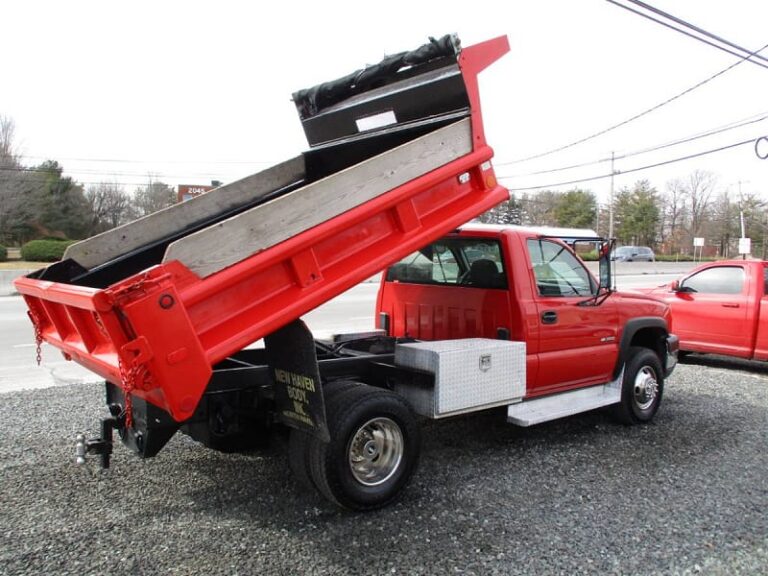
These are often smaller, resembling heavy-duty pickup trucks with an added dump bed. Think of them as F-450 or F-550 sized chassis with a specialized bed. They are great for small projects, tight access areas, or situations where larger trucks can’t maneuver.- Typical Dirt Capacity: Approximately 3 to 7 cubic yards.
- Usage: Ideal for small backyard projects, homeowner deliveries, or delivering smaller quantities of specialized soil. Their compact size makes them nimble, but their payload is limited.
-
Tandem Axle Dump Truck (The Workhorse):
This is arguably the most common type of dump truck you’ll see making deliveries to residential and smaller commercial job sites. It features two rear axles (hence "tandem"), which distribute weight more effectively and allow for a significantly higher payload than single-axle trucks.- Typical Dirt Capacity: Generally ranges from 10 to 14 cubic yards. For lighter, fluffy materials like mulch, they might carry up to 16-18 yards by volume, but for dirt, weight is often the limiting factor.
- Usage: Perfect for medium to large landscaping projects, foundation backfills, or significant grading work. This is usually the go-to option for many contractors and homeowners.
-
Tri-Axle Dump Truck (Heavy-Duty):
As the name suggests, tri-axle trucks have three rear axles, providing even greater weight distribution and payload capacity. These trucks are often used for larger construction projects where significant volumes of material need to be moved efficiently.- Typical Dirt Capacity: Can hold between 15 and 20 cubic yards of dirt. Again, the exact volume depends heavily on the dirt’s weight.
- Usage: Suited for larger commercial developments, road construction, or very extensive residential projects requiring substantial amounts of fill dirt or topsoil.
-
Semi-Trailer Dump Trucks (End Dumps, Belly Dumps, Transfer Trailers):
These are the largest haulers, consisting of a tractor unit pulling a separate trailer with a dump body.- End Dump Trailers: The most common for dirt and aggregates, they lift the entire bed to dump material out the back.
- Typical Dirt Capacity: Can haul anywhere from 20 to 30 cubic yards or more, depending on the trailer size and legal limits.
- Usage: Reserved for very large-scale commercial, industrial, or agricultural projects where massive quantities of material are needed. Not typically used for residential deliveries due to their size and maneuverability challenges.
- Belly Dumps/Bottom Dumps: Material is discharged from the bottom of the trailer. Great for spreading material in a line, like for road base.
- Transfer Dump Trucks: A standard dump truck that pulls a separate trailer, allowing it to carry more material per trip by "transferring" material from the main truck body to the trailer.
- End Dump Trailers: The most common for dirt and aggregates, they lift the entire bed to dump material out the back.
Understanding these distinctions is crucial when talking to a supplier. Always specify your project size and access limitations so they can recommend the appropriate truck.
2. Density and Type of Dirt/Material
This is where the "weight limit" often trumps the "volume limit." Not all "dirt" is created equal. The type of soil, its composition, and especially its moisture content dramatically affect its density and thus its weight per cubic yard.
- Topsoil: Generally lighter, especially if it’s screened and aerated, but can become quite heavy when wet. A cubic yard of dry topsoil might weigh around 1,800 to 2,200 pounds (0.9 to 1.1 tons).
- Fill Dirt: Often consists of heavier clay, sand, and rock mixtures. It tends to be denser and can weigh more. A cubic yard can range from 2,200 to 2,700 pounds (1.1 to 1.35 tons), and even more if heavily compacted or wet.
- Sand: Varies, but typically ranges from 2,700 to 3,000 pounds per cubic yard (1.35 to 1.5 tons).
- Gravel/Crushed Stone: One of the densest materials, often weighing 2,800 to 3,200 pounds per cubic yard (1.4 to 1.6 tons).
Pro Tip from us: Always consider the material’s weight, not just its perceived volume. A truck might have the physical space for 14 cubic yards of a light material like mulch, but it might only be able to legally carry 10-12 cubic yards of heavy, wet fill dirt before exceeding its weight limits. This is a common pitfall for those new to ordering bulk materials.
3. Legal Weight Limits (GVWR)
This is perhaps the most critical, yet often overlooked, factor. Every dump truck has a Gross Vehicle Weight Rating (GVWR) set by the manufacturer, which is the maximum operating weight of the truck and its payload. Additionally, federal, state, and local Department of Transportation (DOT) regulations impose strict limits on how much weight a commercial vehicle can legally carry on public roads. These limits are in place for safety, to prevent damage to roads and bridges, and to ensure fair competition.
- Axle Weight Limits: Regulations often specify maximum weight per axle or per axle group. This is why multi-axle trucks exist – to distribute weight over more tires and axles.
- Impact on Capacity: For dense materials like wet dirt, a dump truck will almost always reach its legal weight limit before it runs out of physical space in its bed. This means a truck might appear only three-quarters full but is already at its maximum legal weight.
- Common Mistake to Avoid: Don’t pressure a driver or supplier to "heap" the load if they indicate it’s already at legal capacity. Overloaded trucks are unsafe, illegal, and can lead to hefty fines for the trucking company, and potentially you as the receiver if an incident occurs on your property.
4. Truck Bed Dimensions
While weight limits are often the primary constraint for dirt, the physical dimensions of the truck bed also determine the maximum possible volume. If you know the interior length, width, and average height of the dump bed, you can calculate its theoretical maximum cubic yard capacity.
How to Calculate Cubic Yards:
- Measure Dimensions: Get the interior length, width, and height of the dump bed in feet.
- Example: Length = 12 ft, Width = 8 ft, Height = 4 ft
- Calculate Cubic Feet: Multiply these three measurements.
- 12 ft 8 ft 4 ft = 384 cubic feet
- Convert to Cubic Yards: Divide the total cubic feet by 27 (since 1 cubic yard = 27 cubic feet).
- 384 cubic feet / 27 = 14.22 cubic yards
This calculation gives you the maximum volumetric capacity. Remember, the actual amount of dirt delivered will still be subject to the material’s density and legal weight limits.
Calculating Your Dirt Needs: Beyond the Truck
Now that you understand dump truck capacities, let’s turn the focus to your project. Accurately estimating how much dirt you need is just as important as knowing how much a truck can hold.
Estimating Project Volume (The L x W x D Method)
This is the most fundamental way to determine your material requirements.
- Measure in Feet: Measure the length (L), width (W), and desired depth (D) of the area you need to fill, all in feet.
- Example: You need to fill a garden bed that is 20 feet long, 5 feet wide, and 1.5 feet deep.
- Calculate Cubic Feet: Multiply Length x Width x Depth.
- 20 ft 5 ft 1.5 ft = 150 cubic feet
- Convert to Cubic Yards: Divide the total cubic feet by 27.
- 150 cubic feet / 27 = 5.56 cubic yards
Consider Compaction and Settling: Dirt, especially loose topsoil or fill dirt, will compact and settle over time. Depending on the material and application, you might experience 10-20% compaction.
Pro Tip from us: Always order 10-15% more dirt than your initial calculation. It’s far better to have a little extra than to run short and have to pay for an entirely new delivery fee for a small top-up. Plus, having a small reserve is useful for minor adjustments or future small projects.
Why Accurate Estimation Matters
Getting your dirt estimate right isn’t just about saving a few bucks; it impacts the entire project.
- Cost Savings: Multiple delivery fees can quickly add up. A single, well-planned delivery is always more economical.
- Project Timelines: Running out of material means pausing work, waiting for another delivery, and potentially delaying your entire project.
- Waste Reduction: Over-ordering means dealing with excess material, which might require disposal services or finding a place to store it, adding unwanted costs and effort.
- Environmental Impact: Reducing unnecessary trips and material waste is also a more environmentally responsible approach.
Cost Considerations for Dirt Delivery
The price of dirt isn’t just about the material itself; delivery plays a significant role.
- Price Per Cubic Yard: This varies widely based on the type of dirt (e.g., screened topsoil is more expensive than basic fill dirt), its quality, and your local market conditions.
- Delivery Fees: This is often a flat rate per truckload or a charge based on distance from the supplier. Longer hauls mean higher delivery costs due to fuel and driver time.
- Minimum Order Sizes: Many suppliers have a minimum cubic yardage for delivery (e.g., 5 or 10 yards). If you need less, you might still have to pay for the minimum.
- Fuel Surcharges: Due to fluctuating fuel prices, many companies add a fuel surcharge to their delivery fees.
Pro Tip from us: Always get quotes from at least two or three different local suppliers. Be clear about the type of dirt you need, the exact quantity, and your delivery address for an accurate estimate. Don’t be afraid to ask about any hidden fees!
Choosing the Right Dump Truck for Your Project
Selecting the correct truck size goes beyond just capacity; it involves practical site considerations.
- Matching Truck Size to Project Size: For a small garden bed, a single-axle truck might be sufficient and more cost-effective. For a large grading project, a tandem or tri-axle will be more efficient.
- Site Access: This is paramount. Can a large dump truck safely navigate your driveway? Are there tight turns, narrow gates, or overhead obstacles like power lines, tree branches, or low arches?
- Based on my experience: Always discuss site access with the dispatcher or driver beforehand. Sometimes, a smaller truck is necessary even if it means more trips, simply because a larger truck cannot safely reach the drop-off point.
- Maneuverability: Larger trucks require more space to turn around and dump. Ensure you have ample room for the truck to back up, lift its bed, and exit.
If you’re unsure, sending photos or a video of your access route to the supplier can be incredibly helpful. They might even offer a site visit for large or complex deliveries.
Safety First: Receiving a Dirt Delivery
Safety should always be your top priority when a large truck is on your property.
- Clear the Drop-Off Zone: Ensure the area where the dirt will be dumped is completely clear of people, pets, vehicles, tools, and any fragile items. Mark the exact spot if possible.
- Watch for Overhead Obstacles: Remind the driver about any overhead power lines, low tree branches, or garage overhangs. When the dump bed is raised, it reaches significant heights.
- Communicate Clearly with the Driver: Point out the exact drop-off location and any potential hazards. Stay visible to the driver but maintain a safe distance during the entire dumping process.
- Common Mistakes to Avoid: Never stand directly behind a truck while it’s backing up or dumping. Do not approach the truck or try to communicate with the driver until the truck is fully stopped and the driver has indicated it is safe to do so. These machines are powerful, and safety is paramount.
Frequently Asked Questions (FAQs)
Let’s address some common questions that often arise regarding dirt delivery.
- Can I get half a dump truck of dirt?
It depends on the supplier. Some might offer "split loads" (e.g., half dirt, half gravel) or smaller minimum deliveries, especially with single-axle trucks. However, for a tandem axle, you’ll often pay for the full truckload delivery fee even if you only need half the volume, making it less cost-effective. - How much does a yard of dirt weigh?
As discussed, it varies greatly. Dry topsoil can be around 1,800-2,200 lbs (0.9-1.1 tons) per cubic yard. Wet fill dirt with clay can be 2,700-3,000 lbs (1.35-1.5 tons) per cubic yard. Always assume it will be heavier rather than lighter. - What’s the difference between topsoil and fill dirt?
Topsoil is the uppermost layer of soil, rich in organic matter and nutrients, ideal for planting, gardening, and lawns. Fill dirt is subsoil, typically devoid of organic matter, used for filling large holes, building up grades, or creating stable foundations. It’s not suitable for planting but is excellent for structural purposes.- For more on soil types, you might find our guide on helpful. (Internal Link 1)
Conclusion
Navigating the world of dirt delivery doesn’t have to be overwhelming. While the question "How many yards of dirt in a dump truck?" doesn’t have a single, simple answer, understanding the key factors at play – truck type, material density, legal weight limits, and your project’s specific needs – empowers you to make smart, efficient decisions.
By accurately estimating your required volume, communicating clearly with your supplier, and prioritizing safety, you can ensure your dirt delivery is a smooth, cost-effective, and successful part of your project. Don’t be afraid to ask questions, plan thoroughly, and always add that little extra buffer to your order. Happy digging!
- To further refine your project planning, consider exploring (Internal Link 2) for detailed measurement techniques.
- For official information on commercial vehicle weight limits and regulations, you can consult resources like the Federal Highway Administration (FHWA) or your state’s Department of Transportation website. For example, the Federal Highway Administration’s freight management page offers insights into trucking regulations. (External Link)